Takayama in brief
- The old town, morning markets, Takayama Jinya, Hida Folk Village and sake breweries.
- Shirakawa-go, the UNESCO thatched village, is 50 minutes away: stay a night if you can.
- About 4.5 hours from Tokyo and 3.5 from Kyoto by train via Nagoya; covered by the JR Pass.
- Best in April and October to mid-November, for the festivals and autumn colours; snowy from December to March.
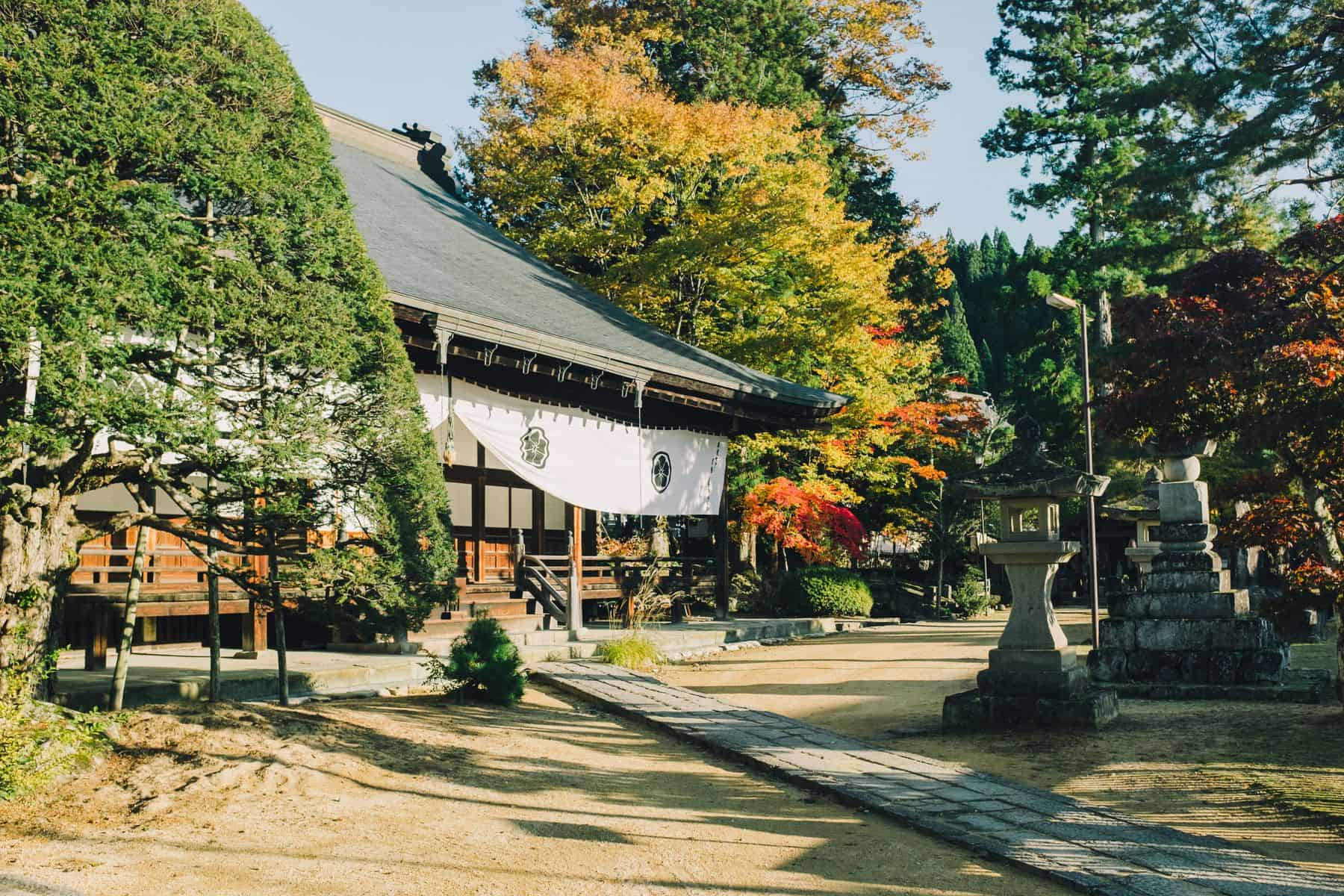
Takayama is a small, old mountain town in the Japanese Alps, and one of the best places in Japan to see what life looked like before the cities grew. Its preserved merchant quarter is lined with dark wooden houses, sake breweries and craft shops; it has two morning markets, one of Japan’s most beautiful festivals and some of its best beef. It’s also the gateway to the thatched farmhouses of Shirakawa-go, the hot springs of Okuhida and the mountain valley of Kamikochi. This guide covers the best things to do in Takayama, Shirakawa-go, day trips, how to get there, where to stay, the weather month by month and how to fit it into a Japan holiday.
Where is Takayama?
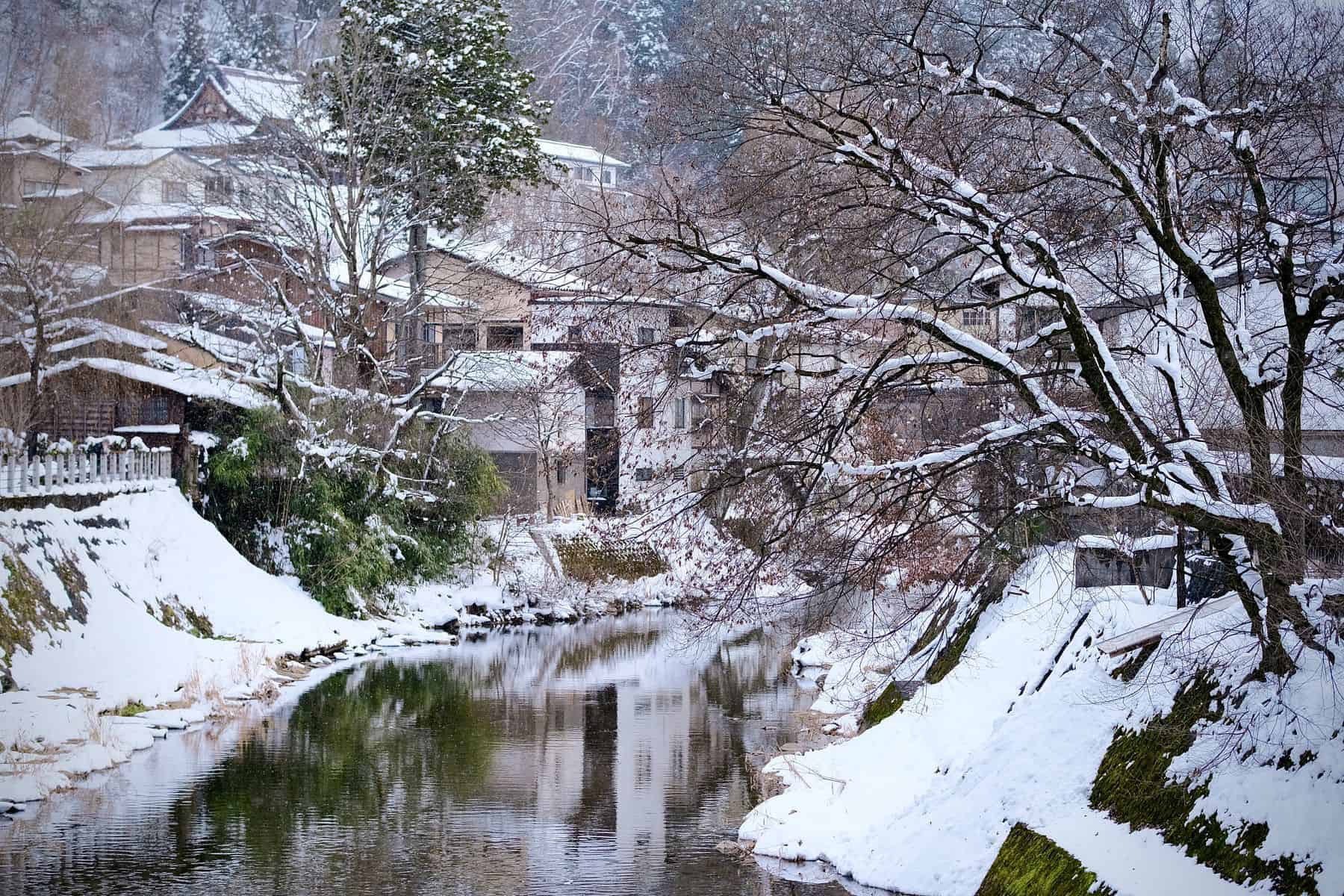
Takayama sits at about 570 m in the Hida mountains of Gifu Prefecture, roughly halfway between Tokyo and Kyoto but well inland, surrounded by the peaks of the Northern Japan Alps. You’ll often see it called Hida-Takayama, after the old province it was the capital of.
Its isolation is why it survived. For centuries the town’s carpenters were famous across Japan, and in the Edo period (1603 to 1868) Takayama was ruled directly by the shogun for its timber and silver. Rich merchants built the wooden townhouses you see today, and the town has protected them ever since.
Takayama is compact and easy to walk: the station, the old town and the river are all within 10 to 15 minutes of each other.
Things to do in Takayama
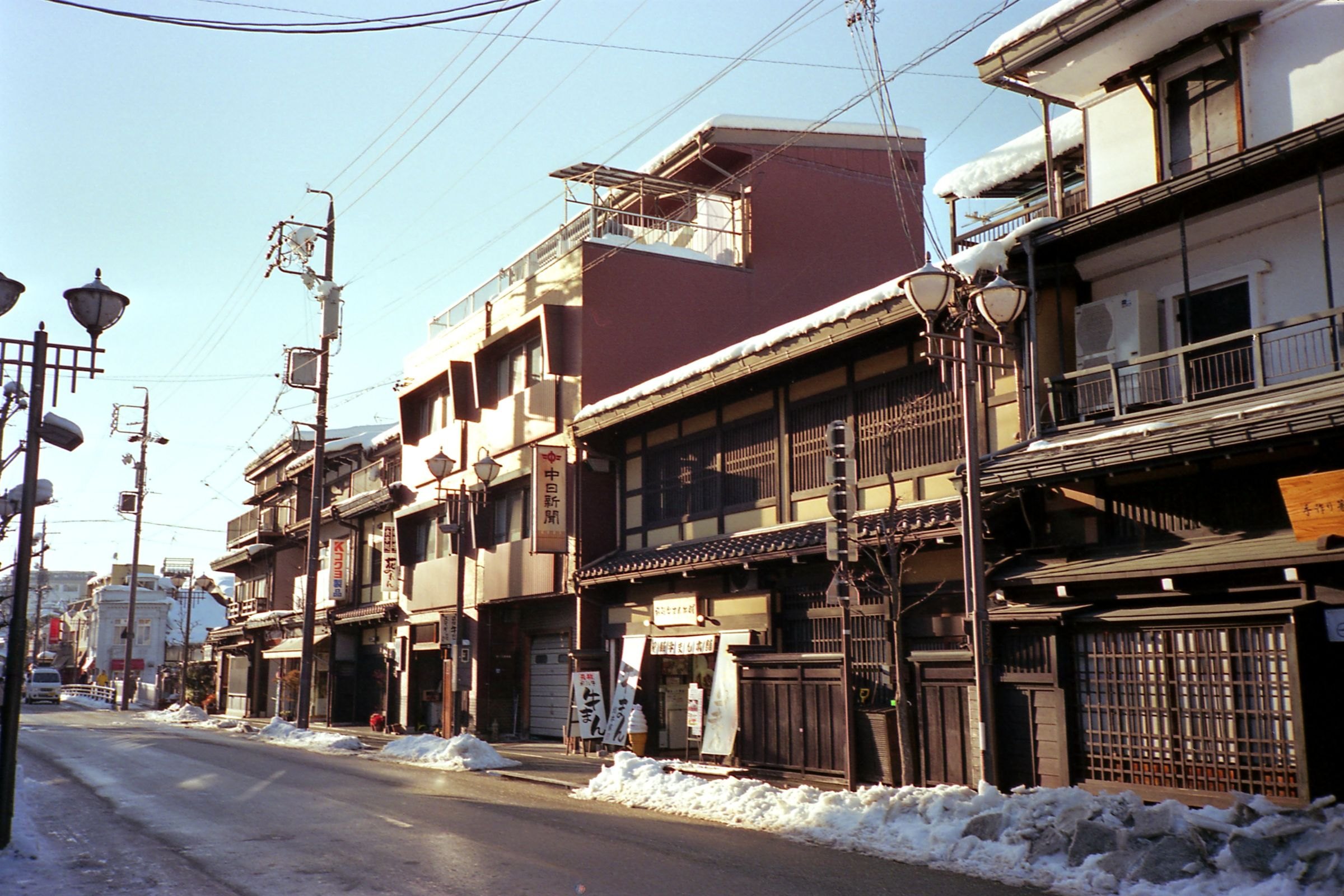
Walk the old town (Sanmachi Suji). Three narrow parallel streets of Edo-period merchant houses with latticed fronts, low eaves and little water channels. Go early or late in the day, before and after the tour groups. Look for the ball of cedar leaves (sugidama) hanging over a doorway: it marks a sake brewery, and many offer tastings.
Takayama Jinya. The shogunate’s government office for the Hida region, and the only one of its kind still standing in Japan: offices, tatami reception rooms, a rice store and an interrogation room, all in wood.
The morning markets. Every morning from about 7am to noon, farmers sell vegetables, pickles, flowers and crafts at the Miyagawa market along the river and the smaller Jinya-mae market in front of the Jinya. Breakfast here, then walk to the old town.
Merchant houses. Two grand townhouses near the old town are open to visitors, with huge exposed timber frames, and show how wealthy Takayama families lived.
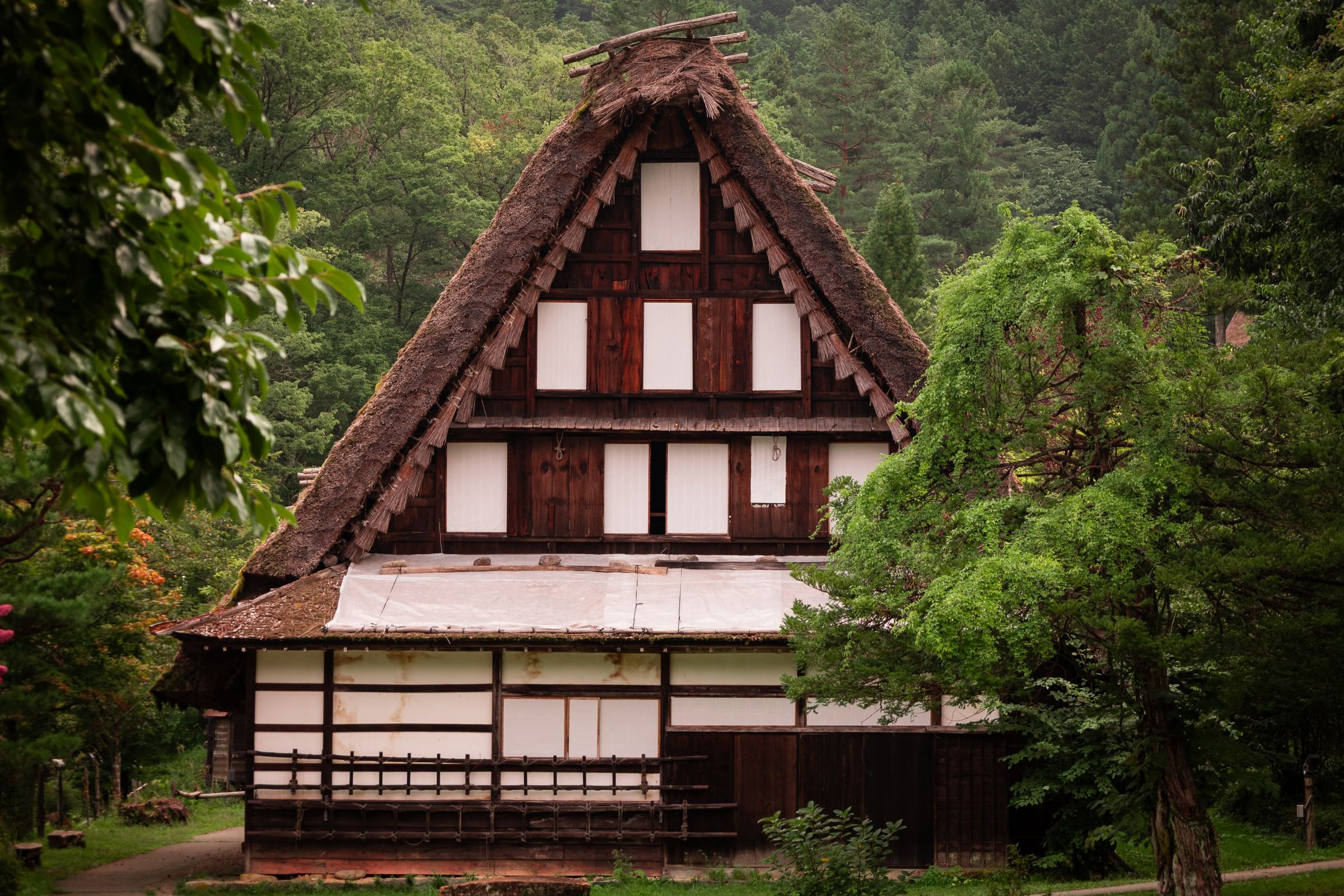
Hida Folk Village (Hida no Sato). An open-air museum of more than 30 old farmhouses, including thatched gassho-zukuri houses, set around a pond on the hill above town, about 10 minutes by bus. It’s quiet, and a good alternative if you can’t get to Shirakawa-go.
The Higashiyama walking course. A 3.5 km path along the eastern hills past a dozen temples and shrines, ending at Shiroyama Park and the ruins of the old castle. Beautiful in autumn.
The festival floats. If you can’t be here for the festival, the floats exhibition hall next to Sakurayama Hachimangu shrine shows several of the real floats all year.
Crafts and sake. Watch woodcarvers at work, buy lacquerware or a sarubobo, the faceless red doll that is Takayama’s lucky charm. Six breweries still work in the old town, and from January to March many hold open days as the new sake is made.
The Takayama Festival
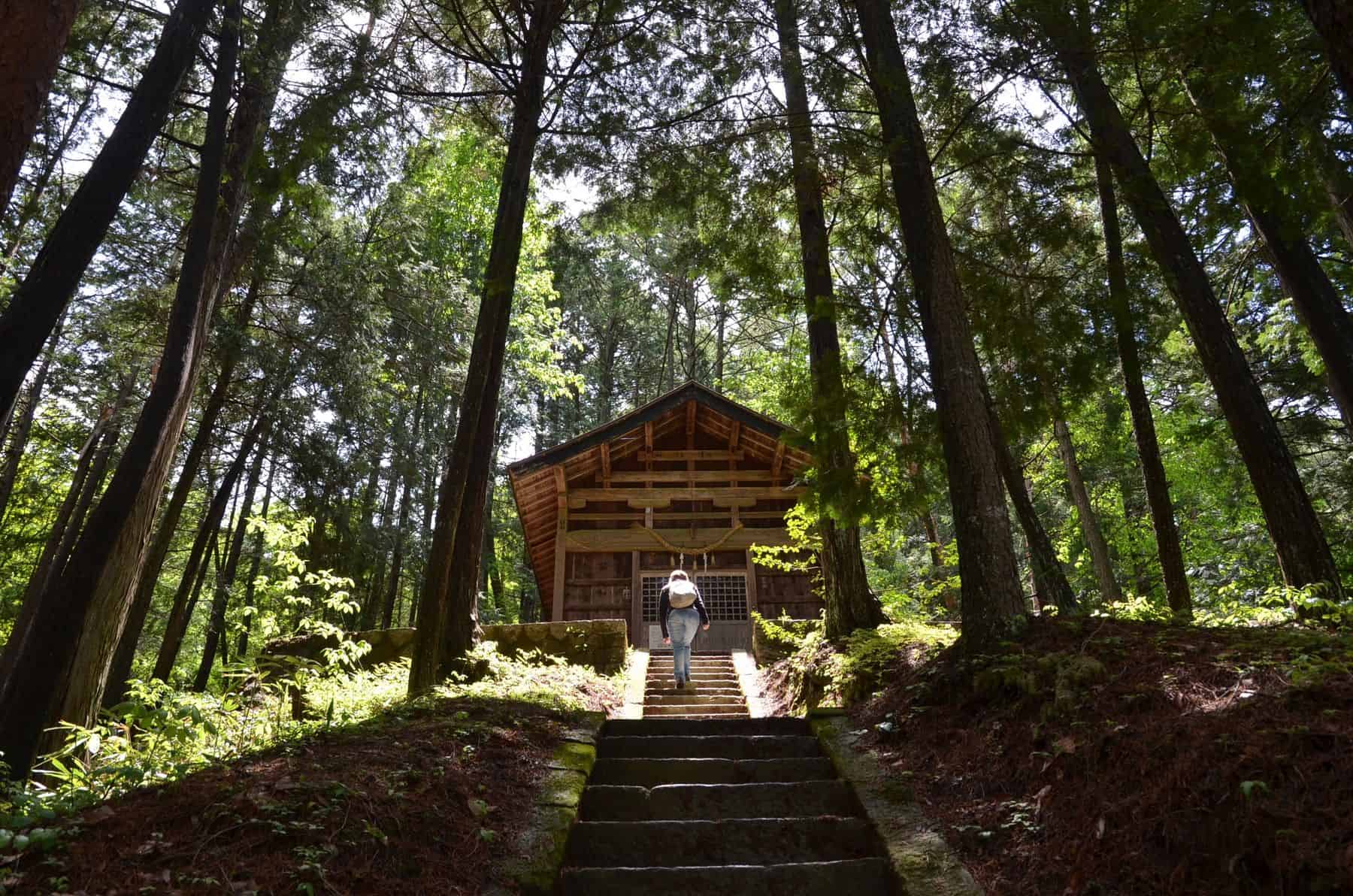
The Takayama Festival is held twice a year and is one of Japan’s three most beautiful festivals. The spring festival (Sanno Matsuri) on 14 and 15 April centres on Hie Shrine in the south of the old town; the autumn festival (Hachiman Matsuri) on 9 and 10 October centres on Sakurayama Hachimangu in the north. Huge, richly carved and lacquered floats (yatai) are paraded through the streets, some with karakuri puppets that perform on top, and in the evening the floats are lit with hundreds of lanterns. The floats are part of a UNESCO-listed group of Japanese float festivals. Rooms in town sell out many months ahead, so book early or stay in Okuhida or Gero and come in for the day.
What to eat in Takayama

Hida beef is the local wagyu, finely marbled and as good as the better-known names. In the old town you’ll find it as beef sushi served on a rice cracker, grilled on skewers and in buns. At dinner, try hoba miso: beef and miso cooked at the table on a dried magnolia leaf over a small burner.
Takayama ramen (chuka soba) is light, with a soy broth and thin curly noodles. Mitarashi dango, rice dumplings grilled with soy sauce, are the snack of choice in the old town.
Most ryokan serve a multi-course kaiseki dinner with Hida beef and mountain vegetables. If you’re vegetarian, tell us early, as dashi (fish stock) is in almost everything.
Shirakawa-go

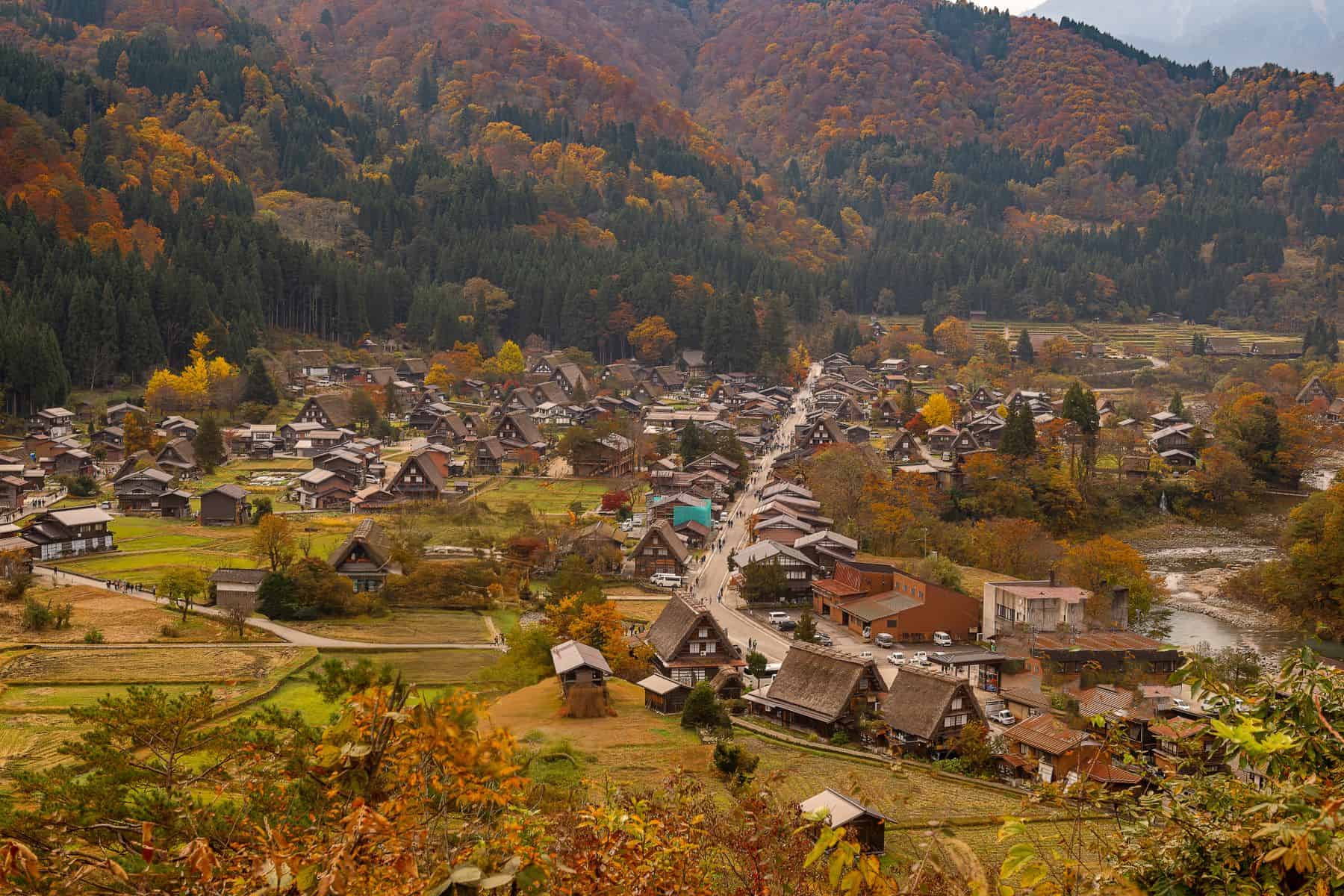
Shirakawa-go is a village of steep thatched farmhouses in a narrow valley about 50 minutes’ drive from Takayama. With the Gokayama villages next door, it has been a UNESCO World Heritage Site since 1995.
The houses are called gassho-zukuri, “built like hands joined in prayer”: the thatched roofs are steep to shed the heavy snow, and the big attics were used to raise silkworms. Some are more than 250 years old. Families still live in many of them, and the roofs are rethatched by the whole village working together.
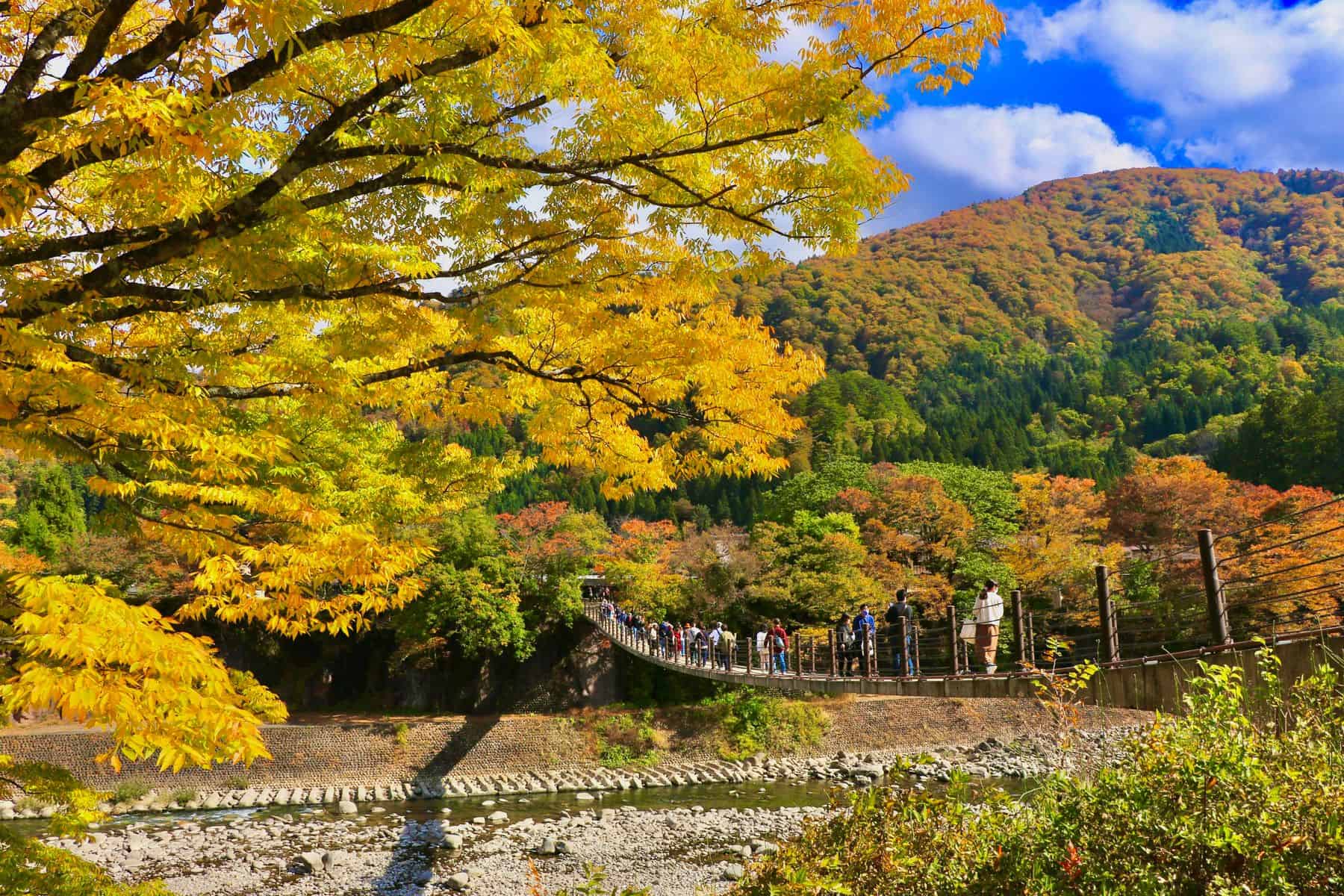
What to do: walk up to the viewpoint above the village (about 20 minutes, or a shuttle bus) for the classic view, visit one of the larger farmhouses that are open as museums, and cross the suspension bridge over the river. Day visitors leave by late afternoon, so it’s far more peaceful if you stay the night in a farmhouse inn, with dinner around the hearth.

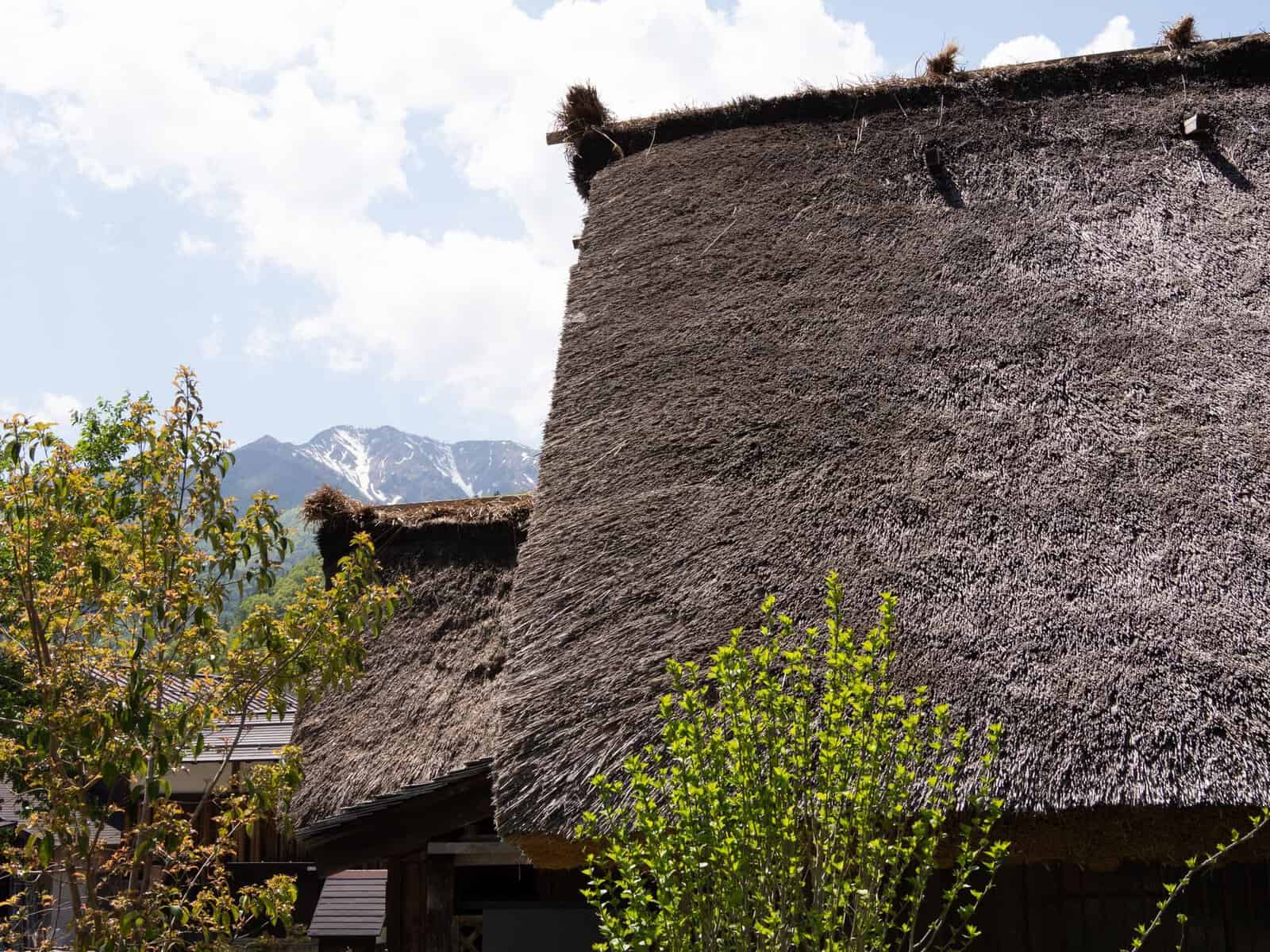
Winter light-up: on a few evenings in January the farmhouses are lit up against the snow. For 2027 the dates are 11, 17, 24 and 31 January, and entry is by advance reservation only (parking, buses and tours are all booked ahead). Gokayama, 30 minutes further on, has the smaller villages of Ainokura and Suganuma: fewer houses, far fewer visitors.
Day trips and the Japanese Alps
Okuhida hot springs
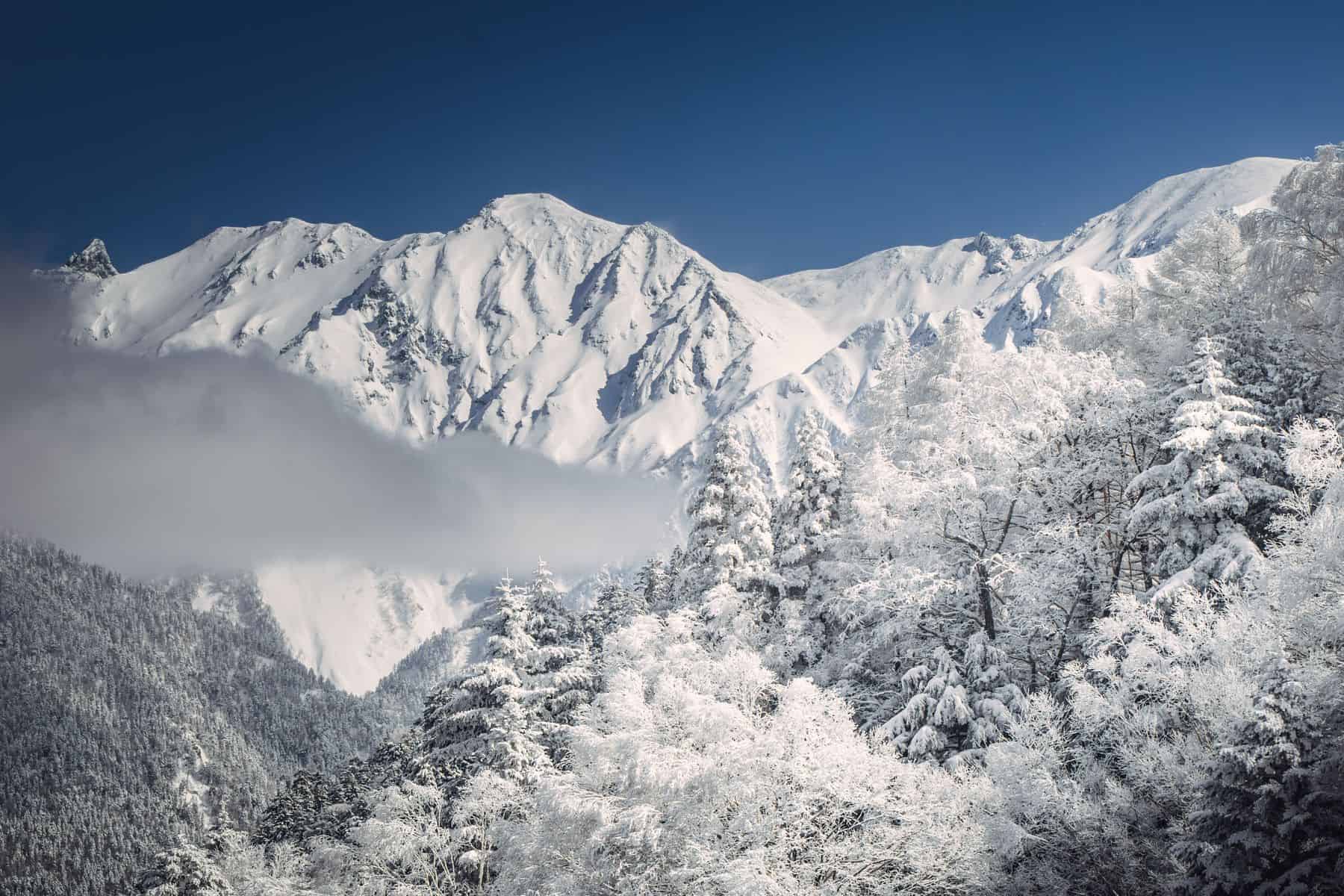
Five hot-spring villages (Okuhida Onsen-go) high in the mountains east of Takayama, with outdoor baths looking up at the peaks. Ride the Shinhotaka Ropeway, a two-stage cable car with a double-decker gondola, to a viewing deck at about 2,150 m. Lovely for a night in a ryokan, especially in snow.

Kamikochi
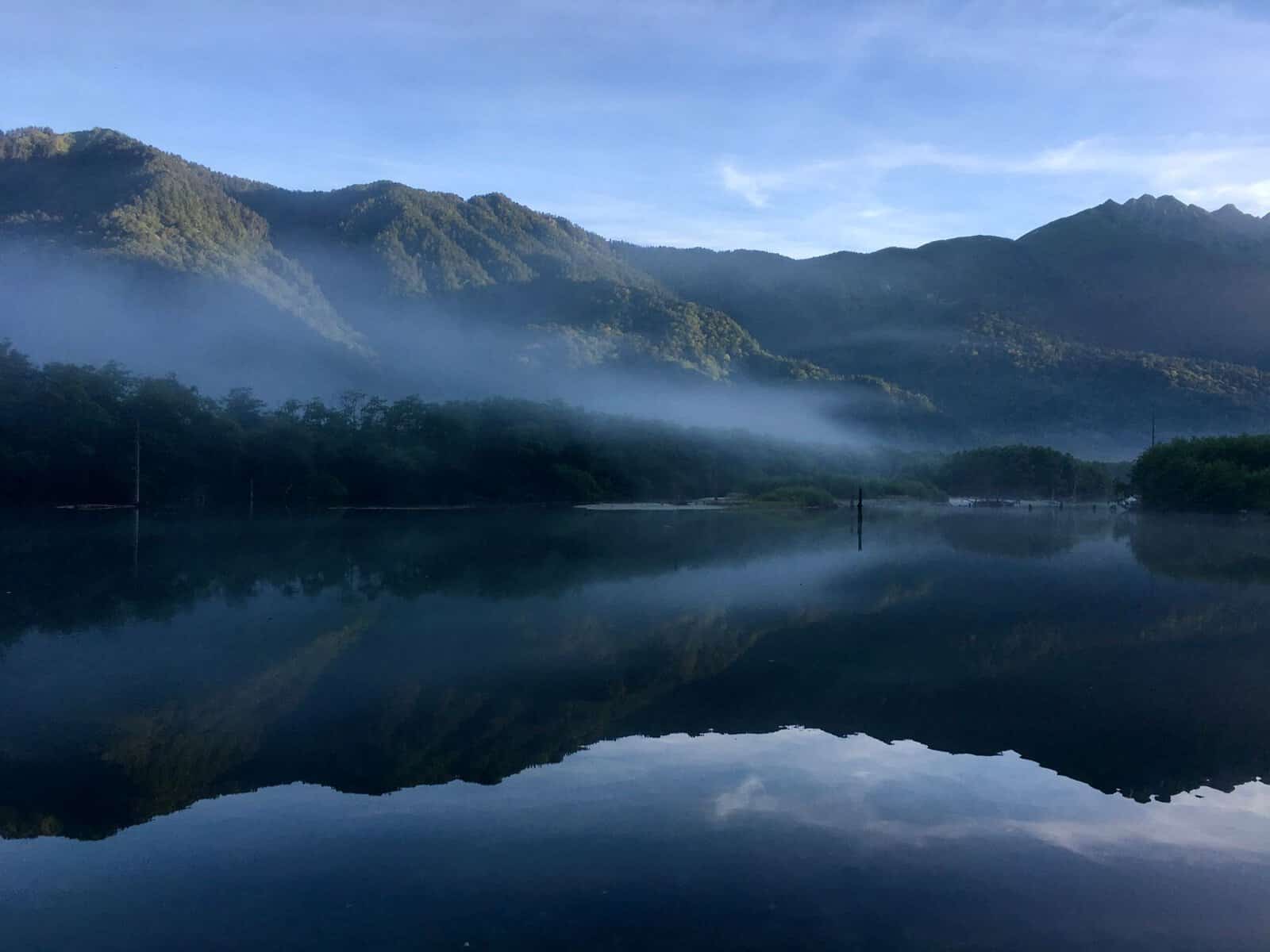
A high valley at about 1,500 m in the Chubu Sangaku National Park, with the clear Azusa River running beneath the Hotaka peaks. Private cars are banned, so you arrive by bus via Hirayu Onsen. Easy flat walks link Taisho Pond, Kappa Bridge and Myojin Pond. It’s open only from mid-April to mid-November (17 April to 15 November in 2026).

The Nakasendo post towns
The old road between Kyoto and Edo (Tokyo) is best preserved in the Kiso Valley, where you can walk the 8 km between Magome and Tsumago in about three hours, with your bags sent ahead. Easy to add on the way between Takayama and Kyoto or Tokyo.
Kanazawa
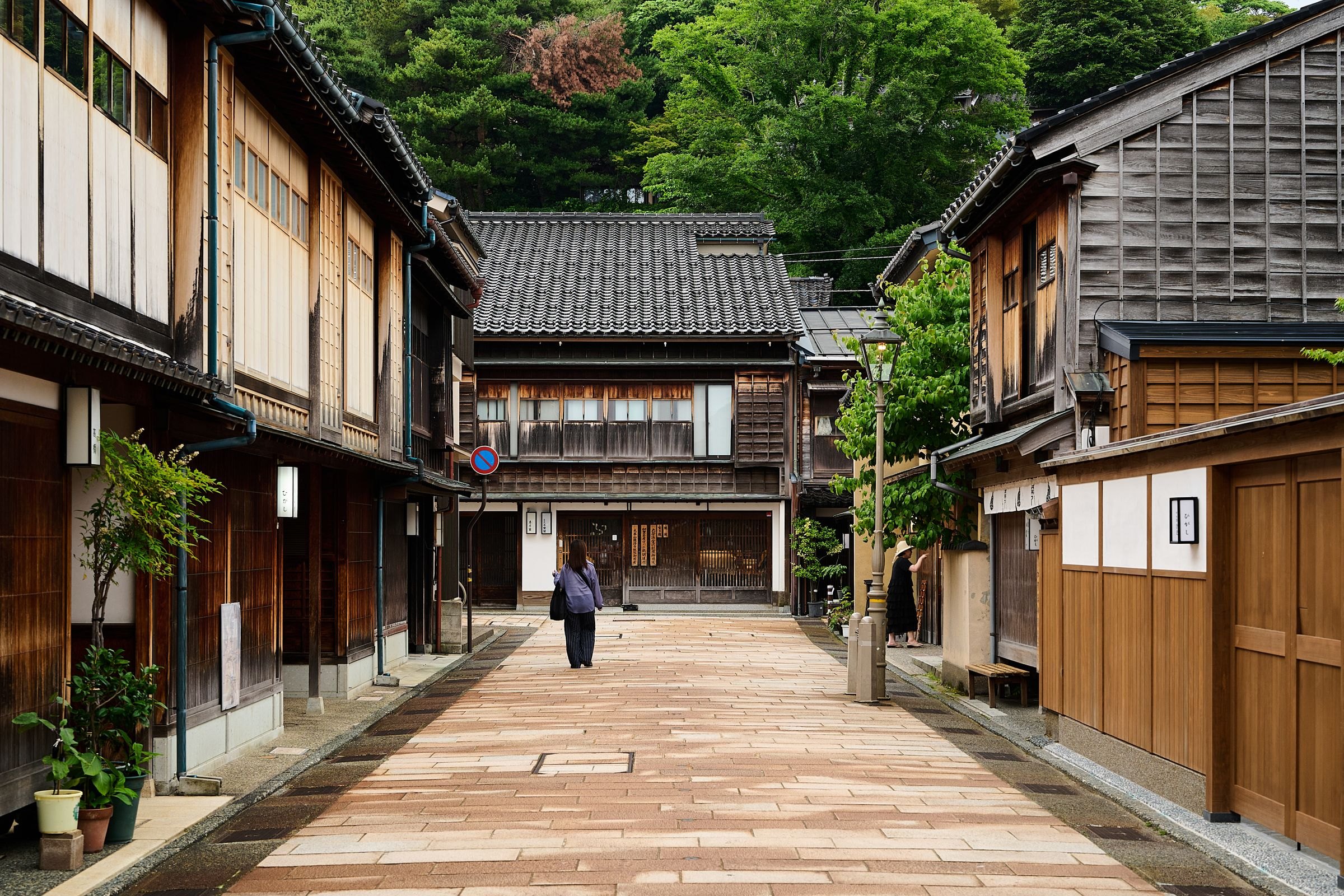
A refined castle city on the coast with Kenroku-en, one of Japan’s three great gardens, old geisha and samurai districts and a superb seafood market. Buses from Takayama stop at Shirakawa-go on the way, and Kanazawa is on the shinkansen line back to Tokyo.

Matsumoto
Home to Matsumoto Castle, one of Japan’s few original castles, black-walled above its moat. Buses cross the mountains from Takayama, past Hirayu Onsen, so you can link it with Kamikochi.
Takayama or Kanazawa?
They are two hours apart, with Shirakawa-go in between, so most people see both. If you have to choose:
| Takayama | Kanazawa | |
|---|---|---|
| Feel | Small mountain town, rustic and wooden | Elegant city by the sea |
| Highlights | Old town, morning markets, festival, Hida beef | Kenroku-en garden, geisha district, castle, modern art |
| Best for | Old Japan, sake, mountains and onsen | Gardens, crafts, seafood |
| Day trips | Shirakawa-go, Okuhida, Kamikochi | Shirakawa-go, Noto peninsula |
| Getting there | Limited express train from Nagoya or Toyama | Shinkansen from Tokyo, about 2.5 hours |
| Stay | 2 nights | 2 nights |
How to get to Takayama

From Tokyo: take the shinkansen to Nagoya (about 1 hour 40 minutes), then the Limited Express Hida through the mountains to Takayama (about 2.5 hours), around 4.5 hours in total. The Hida line is one of Japan’s most scenic train rides, along river gorges; sit on the right going north. You can also go via the Hokuriku shinkansen to Toyama and take the Hida south (about 1.5 hours), or take a direct highway bus from Shinjuku (about 5.5 hours).
From Kyoto or Osaka: shinkansen to Nagoya, then the Hida, about 3.5 hours in total. One Hida train a day runs direct from Osaka and Kyoto.
From Kanazawa: highway buses take about 2 to 2.5 hours, most stopping at Shirakawa-go. From Matsumoto: buses take about 2.5 hours via Hirayu Onsen.
Takayama to Shirakawa-go: Nohi buses take about 50 minutes, several times a day. Seats sell out in busy seasons, so reserve ahead. The Hida express is covered by the Japan Rail Pass; the buses are not.
Where to stay in Takayama
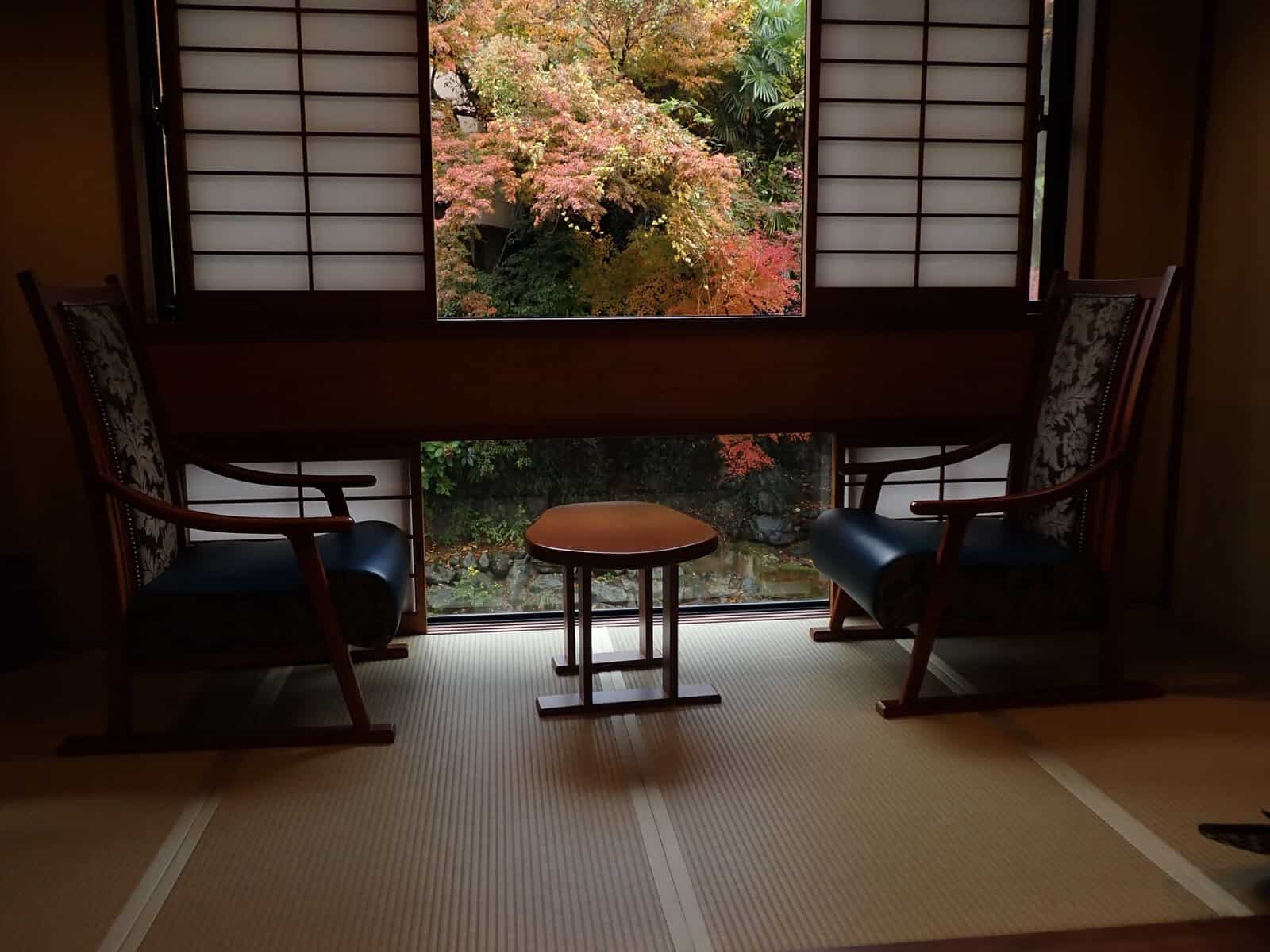
- A ryokan in or near the old town is the classic choice: tatami rooms, a hot bath and a kaiseki dinner with Hida beef. Everything is walkable.
- Hotels near the station are practical for early trains and buses, and are only 10 minutes’ walk from the old town.
- The hills above town have larger spa hotels with views over the valley, linked by shuttle bus.
- A farmhouse inn in Shirakawa-go for one night, to see the village after the day visitors have gone.
- An onsen ryokan in Okuhida for outdoor baths in the mountains, especially in winter.
Tell us your style and budget and we’ll match the right ryokan or hotel; we book stays across Takayama, Shirakawa-go and the Alps.
Best time to visit Takayama
Takayama has four very distinct seasons. April brings the spring festival (14 and 15 April) and cherry blossom, which here usually peaks in mid-April, about two weeks after Tokyo. May is fresh and green, and Kamikochi opens. June and July are the rainy season, then August is warm, around 29°C. October to mid-November is the most beautiful time, with the autumn festival (9 and 10 October) and the leaves turning from late October. December to March is cold, often below freezing at night, with deep snow in Shirakawa-go: magical, and quieter, but some mountain roads close and Kamikochi is shut.
| Month | Takayama | Shirakawa-go |
|---|---|---|
| Jan | 3°C / -5°C · 125 mm | 3°C / -4°C · 230 mm |
| Feb | 4°C / -5°C · 110 mm | 4°C / -4°C · 185 mm |
| Mar | 10°C / 0°C · 150 mm | 9°C / 0°C · 190 mm |
| Apr | 15°C / 5°C · 185 mm | 15°C / 5°C · 210 mm |
| May | 21°C / 10°C · 160 mm | 21°C / 11°C · 165 mm |
| Jun | 24°C / 15°C · 190 mm | 24°C / 15°C · 215 mm |
| Jul | 28°C / 19°C · 280 mm | 28°C / 20°C · 280 mm |
| Aug | 29°C / 20°C · 215 mm | 29°C / 21°C · 260 mm |
| Sep | 25°C / 16°C · 215 mm | 25°C / 17°C · 270 mm |
| Oct | 18°C / 9°C · 165 mm | 19°C / 10°C · 205 mm |
| Nov | 13°C / 4°C · 115 mm | 13°C / 5°C · 170 mm |
| Dec | 6°C / -1°C · 155 mm | 6°C / -1°C · 270 mm |
Average daily high / low and monthly rain or snow (as water), 10-year ERA5 data. Snow lies in Shirakawa-go from about December to March.
How many days in Takayama? Sample routes
Two nights in Takayama is right for most people: a day for the town and a day for Shirakawa-go or the hot springs. Add a night in Shirakawa-go if you can.
Takayama and Shirakawa-go
- Takayama (2 nights)
- Shirakawa-go farmhouse (1)
- On to Kanazawa
The essentials, on the way from Nagoya to Kanazawa.
The Japanese Alps
- Matsumoto (1 night)
- Kamikochi (1)
- Okuhida onsen (1)
- Takayama (2)
- Shirakawa-go (1)
- Kanazawa (1)
Castle, mountain valley, hot springs, old town and thatched village. Mid-April to mid-November.
Tokyo to Kyoto through the Alps
- Tokyo (3 nights)
- Takayama (2)
- Shirakawa-go (1)
- Kanazawa (2)
- Kyoto (4)
A first trip to Japan that swaps a bullet train day for the mountains.
Planning the rest of the trip? See our Japan holiday guide for Tokyo, Kyoto, Hiroshima and Hokkaido, and our cherry blossom guide for spring dates city by city.
Ways to see Takayama with us

Prefer your own pace? A tailor-made Japan holiday can add Takayama, a farmhouse night in Shirakawa-go and an onsen ryokan to any route, with rail passes and bags sent ahead. Comparing tours? See Japan tours compared.
Practical tips
- Entry: British visitors don’t need a visa for stays of up to 90 days. Check the FCDO Japan advice before you go; it doesn’t advise against travel to this region.
- Book ahead: rooms for the festival dates and Shirakawa-go farmhouse inns, buses to Shirakawa-go in busy seasons and the January light-up.
- Luggage: send big cases ahead by courier (takkyubin) and travel with an overnight bag, especially for buses and farmhouse stays.
- Cash: cards are widely taken, but carry yen for markets, buses and small shops.
- Winter: bring warm layers and shoes with grip: the old town streets get icy.
- Early and late: the old town and Shirakawa-go are busiest from 10am to 4pm. Stay over to enjoy them quietly.
- Onsen etiquette: wash before you bathe, no swimwear, and some baths don’t allow tattoos: ask us for tattoo-friendly or private baths.
Frequently asked questions
Is Takayama worth visiting?
Yes. It's one of the best-preserved old towns in Japan, with Edo-period merchant streets, morning markets and sake breweries, and it's the gateway to Shirakawa-go, Okuhida's hot springs and Kamikochi.
How many days do you need in Takayama?
Two nights covers the old town, the morning market and a day trip to Shirakawa-go. Add a night in a Shirakawa-go farmhouse or an Okuhida onsen ryokan if you can.
How do you get from Tokyo to Takayama?
Take the shinkansen to Nagoya and the Limited Express Hida to Takayama, about 4.5 hours in total and covered by the Japan Rail Pass. Direct highway buses from Shinjuku take about 5.5 hours.
How do you get from Takayama to Shirakawa-go?
By Nohi bus in about 50 minutes, several times a day. Reserve seats in busy seasons. Many buses continue to Kanazawa, so you can stop on the way.
When is the Takayama Festival?
Twice a year: the spring festival on 14 and 15 April and the autumn festival on 9 and 10 October, with ornate floats by day and lantern-lit floats in the evening.
What is the best time to visit Takayama?
April for the spring festival and cherry blossom, and October to mid-November for the autumn festival and colours. Winter is snowy and beautiful but cold; June and July are rainy.
Takayama or Kanazawa: which is better?
They are two hours apart with Shirakawa-go in between, so most people see both. Takayama is a rustic mountain town; Kanazawa is a more elegant city with a famous garden and geisha district.
Does it snow in Takayama?
Yes. Snow is likely from December to March, with night-time temperatures below freezing, and Shirakawa-go gets much deeper snow.
Keep planning
- Japan holiday guide
- Japan holidays
- Escorted tours of Japan
- Japan cherry blossom season
- Japan tours compared
- China holiday guide
- Tailor-made holidays
- Escorted tours
Plan your Japan holiday with a Travel Designer
Tell us when you’d like to go and we’ll plan Takayama, Shirakawa-go and the rest of Japan, with ryokan stays, rail passes and bags sent ahead, in one ATOL-protected booking.
Make an enquiry Japan holidays