Most people meet Catalonia in August, sunburnt and queuing for the Sagrada Família. We’d like to introduce you to its winter self: snow on the Pyrenees, cathedral squares full of Christmas stalls, the Costa Brava’s coastal paths all to yourself, and an entire region standing around barbecues, wearing bibs, dipping charred spring onions into romesco sauce. It is, frankly, the better-dressed version.
Here’s how to spend a Catalan winter — on skis, at the markets or at the table — and how to fold it into one of the sections of the Grand Tour of Catalonia.
The quick answer
- For serious skiing, head to Baqueira-Beret in the Val d’Aran (Section 3).
- For easy, family-friendly slopes near Barcelona, try La Molina and Masella in the Cerdanya (Section 4).
- For Christmas markets, go to Barcelona’s Fira de Santa Llúcia and Girona in December.
- For the calçot season, visit Valls between January and March.
- For winter sun, Barcelona and the coast sit around 14–15°C — perfect for walking, terrible for sunbathing.

Skiing in the Catalan Pyrenees
| Resort | Best for | Good to know |
|---|---|---|
| Baqueira-Beret (Val d’Aran) | Keen skiers, long holidays | One of Spain’s biggest ski areas, with an Atlantic snow record |
| La Molina & Masella (Cerdanya) | Families, weekenders | Linked slopes about two hours from Barcelona |
| Boí Taüll (Alta Ribagorça) | High-altitude skiing | The highest ski area in the Pyrenees, near the Romanesque churches |
| Port Ainé, Espot, Tavascan | Quieter slopes, value | Smaller resorts in the Pallars valleys |
| Vall de Núria | Beginners, a day out | Reached only by rack railway — the most dramatic arrival in skiing |
Baqueira-Beret is the big one, beloved of Spanish royalty and of anyone who likes a long lunch with their powder. It faces the Atlantic, which means more reliable snow than most of the Pyrenees, and the après-ski in Vielha comes with pintxos and the warming Aranese stew, olha. La Molina was skiing before skiing was cool — the first T-bar lift in Spain went up here in 1943 — and together with neighbouring Masella it makes the easiest ski trip from Barcelona. If someone in your party doesn’t ski, dog sledding and snowshoe walks are on offer in several resorts.

Out of season, these same valleys are where Section 3 and Section 4 of the Grand Tour come into their own with lakes and hiking — the ski lifts double as summer viewpoints.
Christmas, the Catalan way
Barcelona’s Fira de Santa Llúcia, outside the cathedral, has been running for well over two centuries and is the place to buy moss, nativity figures and a tió — a smiling log in a red hat that children feed all December and then ‘encourage’ with sticks on Christmas Eve until it produces presents. Yes, really. Look out, too, for the caganer: a small figure squatting discreetly in the corner of every Catalan nativity scene, doing exactly what you think. Nobody is entirely sure why, and everybody loves him.
Girona’s market sits beautifully among its old-town streets, and the lights along the River Onyar make the city even more photogenic than usual. On 26 December, Catalans celebrate Sant Esteve with canelons made from Christmas leftovers, and on 5 January the Three Kings arrive in grand parades.


The calçotada: Catalonia’s messiest feast
Calçots are sweet, mild spring onions, grown so that the white stem stays long and tender. From about November to April, Catalans grill them over vine cuttings until the outside is blackened, wrap them in newspaper to steam, then peel them with their fingers and dip them in romesco, a sauce of peppers, almonds and garlic. Bibs are provided, and needed. A grill of meat follows, then a nap.
The capital of it all is Valls, near Tarragona, which holds the Festa de la Calçotada on the last Sunday in January — complete with an eating contest whose record holder managed more than three hundred. We suggest pacing yourself. Many country restaurants serve calçotadas at weekends through the season; we’ll book a good one.

Winter sun and quiet coasts
Barcelona in January is mild, bright and blissfully calm: think 14–15°C, terraces in the sun at lunchtime and the big sights without the summer crush. The Costa Brava’s Camí de Ronda coastal paths are at their best for walking, and the villages of Empordà feel like they’re yours. Combine a few city days with the coast, or with the snow — two hours apart, which still feels like a minor miracle. Section 5 of the Grand Tour covers both.
Driving in winter
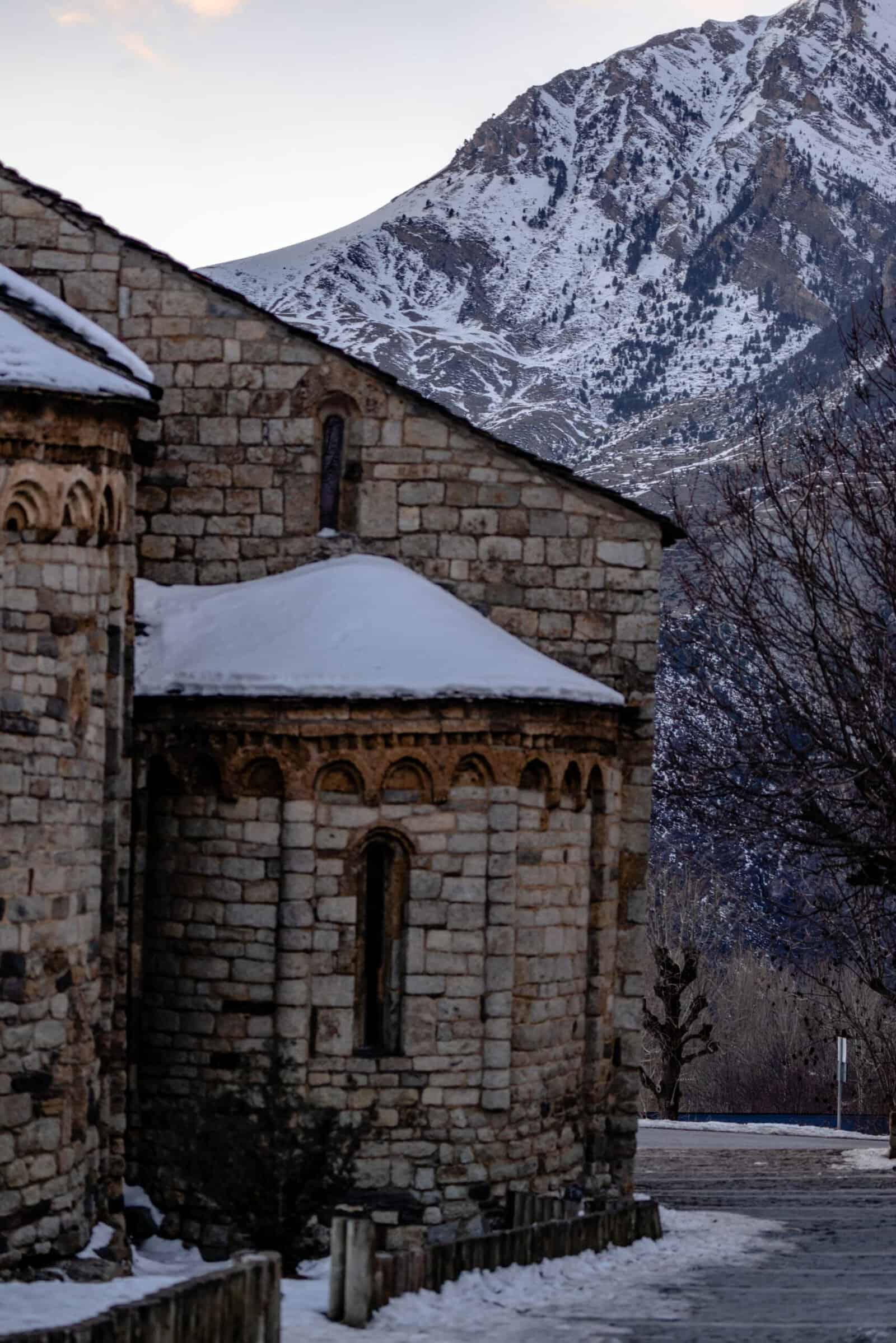
Coastal and lowland roads are easy all year, but in the Pyrenees you’ll need winter tyres or snow chains on some days, and high passes such as the Bonaigua can close after heavy snow. We build in flexible days, choose hotels close to the slopes, and can swap the car for a driver for the mountain stretches if you’d rather not do the hairpins yourself.
Ask us to plan a winter trip →
Frequently asked questions
Where is the best skiing in Catalonia?
Baqueira-Beret in the Val d’Aran is the biggest and most reliable. La Molina and Masella in the Cerdanya are the easiest from Barcelona, and Boí Taüll is the highest in the Pyrenees.
When are the Christmas markets in Catalonia?
Mostly from late November to just before Christmas. Barcelona’s Fira de Santa Llúcia is outside the cathedral, and Girona has a lovely market in its old town.
What is a calçotada?
A feast of grilled calçots — sweet spring onions — dipped in romesco sauce, usually followed by grilled meat. The season runs from about November to April, and Valls holds its festival on the last Sunday in January.
Is Barcelona worth visiting in winter?
Yes. Days are mild and bright, around 14–15°C, and the city is far quieter than in summer.
Do I need snow chains in the Pyrenees?
Sometimes. Winter tyres or chains can be required on mountain roads after snow, and some passes close. We plan routes and hotels to keep driving simple, or book a driver.
Planning a winter break in Catalonia?
Tell us whether you want snow, markets, food or a bit of all three, and we will build the trip around you.