Long before Gaudí, Catalonia was a medieval powerhouse, and it left an astonishing trail of monasteries, Romanesque churches, walled towns and castles. Many are a short drive from Barcelona; others hide in Pyrenean valleys. Here are the ones we think are worth planning a trip around — no knowledge of arches required.
Every site below sits on one of the five sections of the Grand Tour of Catalonia, so you can build them into a tailor-made road trip.
The quick answer
- Easiest from Barcelona: Montserrat and Girona (Section 1, Section 5).
- For Cistercian monasteries: Santes Creus, Poblet and Vallbona (Section 2).
- For UNESCO Romanesque: the Vall de Boí churches (Section 3).
- For a perfect medieval village: Besalú (Section 4).
- Go in spring or autumn for cooler days and fewer coaches.
The essential list
| Site | What it is | Grand Tour section |
|---|---|---|
| Montserrat | Mountain monastery and basilica, home of La Moreneta | 1 |
| Santes Creus | Cistercian monastery with royal tombs | 1 |
| Poblet | Cistercian monastery, UNESCO World Heritage | 2 |
| Vallbona de les Monges | Cistercian convent, still home to nuns | 2 |
| Montblanc | Walled town and the legend of Sant Jordi | 2 |
| Vall de Boí churches | Romanesque churches, UNESCO World Heritage | 3 |
| La Seu d’Urgell | Catalonia’s only fully Romanesque cathedral | 4 |
| Ripoll | Monastery founded in 879, with its carved portico | 4 |
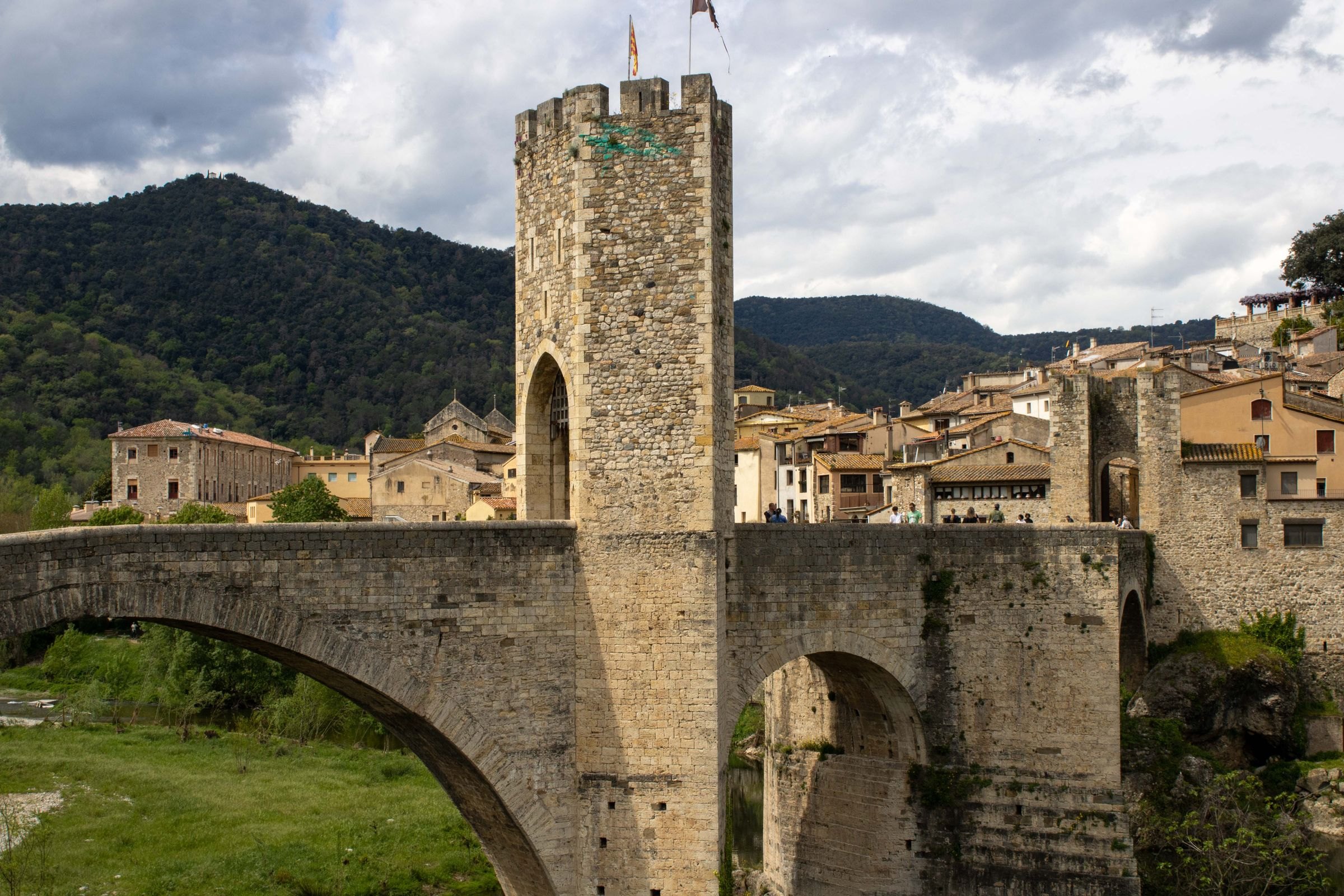
| Besalú | Romanesque bridge and medieval Jewish quarter | 4 |
| Girona | Cathedral, walls and the Call, the Jewish quarter | 5 |
The great monasteries
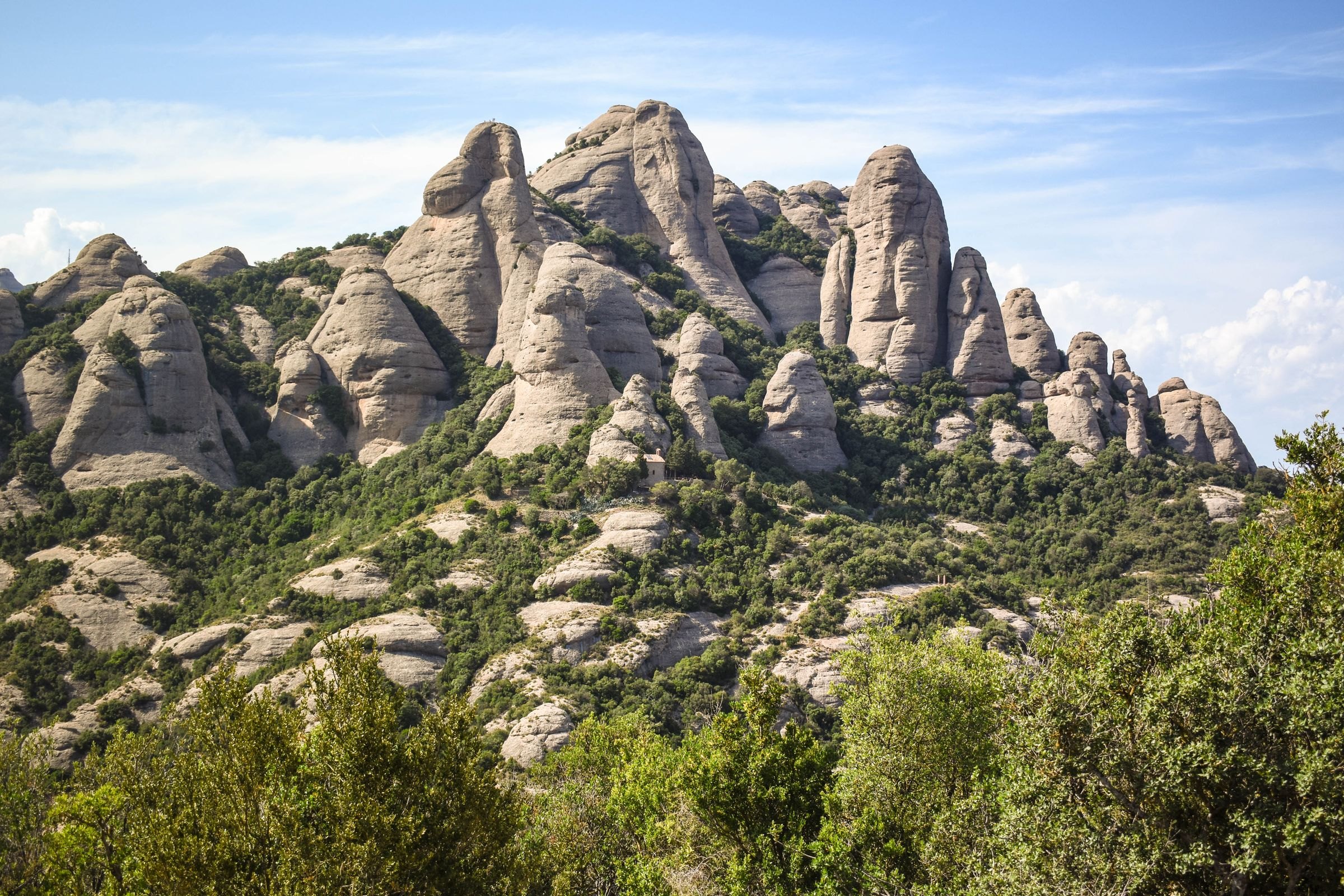
Montserrat is the spiritual heart of Catalonia, a monastery wedged among saw-toothed peaks. Stay the night, as Section 1 does, and you’ll have the mountain paths almost to yourself at sunrise — and if you’re lucky you’ll hear the Escolania boys’ choir. The Cistercian Route links three more: Santes Creus, burial place of Catalan kings; Poblet, a UNESCO-listed monastery below the Prades mountains; and Vallbona de les Monges, where the nuns still live. In the Pyrenees, Ripoll‘s carved portico, founded in 879, is known as the ‘stone bible’.
Romanesque in the Pyrenees
In the Vall de Boí, a medieval family brought master builders to the valley, and within a few decades eight churches and a chapel rose in its villages — now a UNESCO World Heritage Site. In Taüll, Sant Climent and Santa Maria were consecrated a day apart in 1123, and video mapping brings Sant Climent’s frescoes back to life. Further east, La Seu d’Urgell’s Santa Maria is Catalonia’s only fully Romanesque cathedral. Both are on Section 3.
Walled towns and Jewish quarters
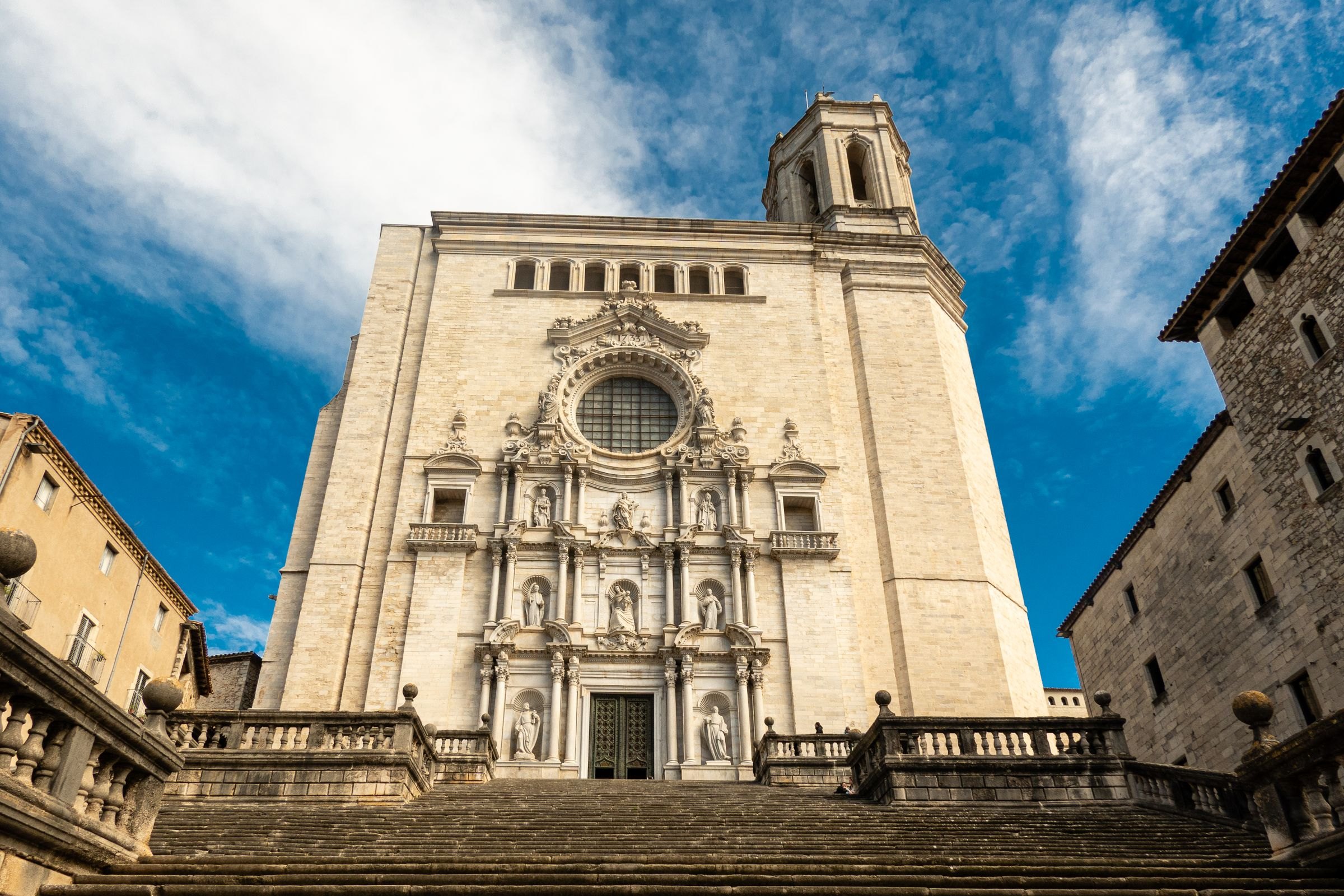
Besalú may be the most photogenic village in Catalonia, with its fortified Romanesque bridge, synagogue and mikveh. Girona has one of Europe’s best-preserved Jewish quarters, the Call, a maze of narrow lanes below the cathedral, plus a walk along the city walls. Montblanc keeps most of its walls and re-enacts the legend of Sant Jordi every April, and Cardona‘s castle stands above the salt mountain.
And in Barcelona
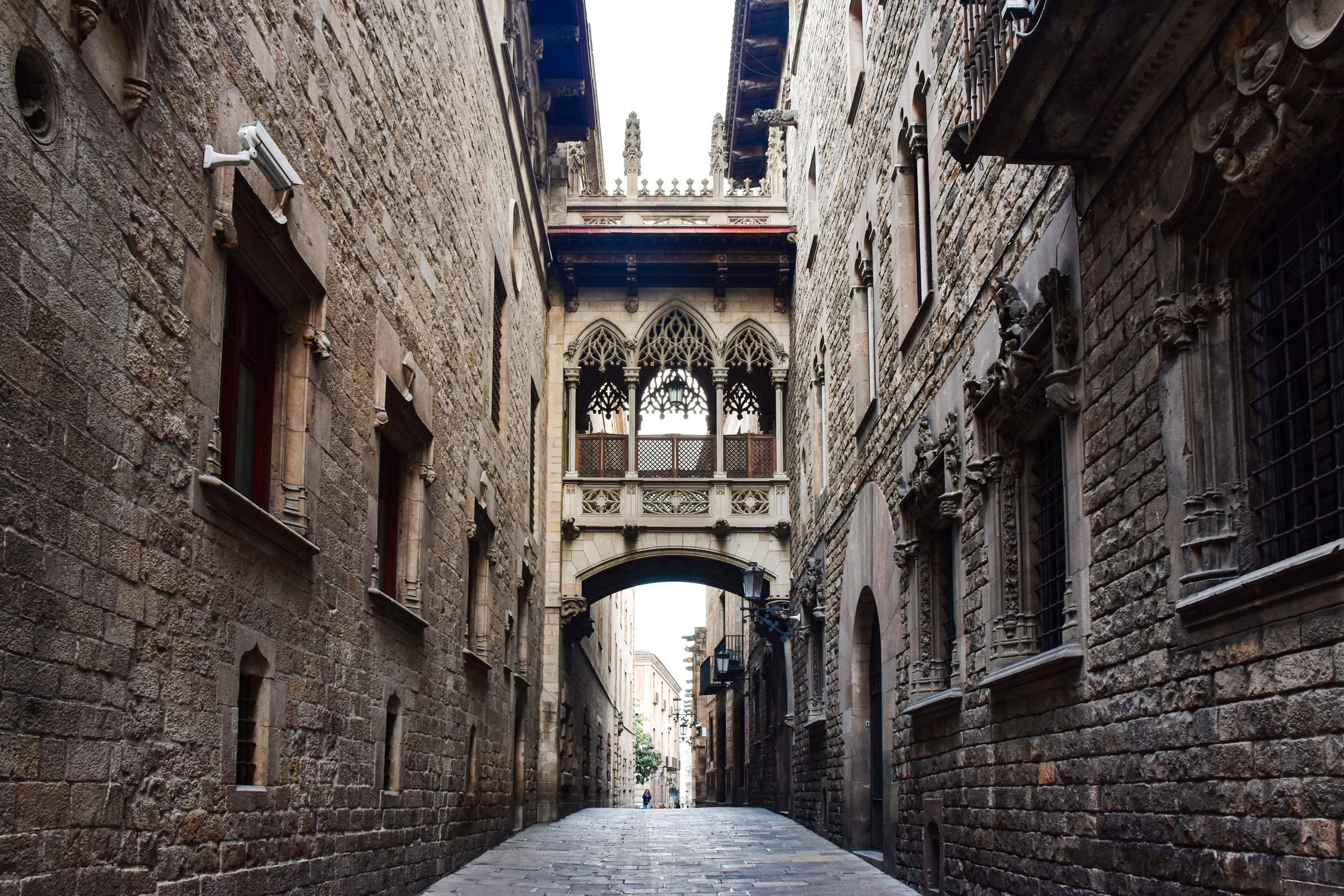
Don’t forget the city itself: the Gothic Quarter around the cathedral, Santa Maria del Mar in El Born, and the medieval Jewish quarter in the streets of Banys Nous and Sant Domènec del Call. It’s the perfect start or finish to a road trip.
Ask us to plan a medieval road trip →
Frequently asked questions
What are the best monasteries in Catalonia?
Montserrat, and the three monasteries of the Cistercian Route: Santes Creus, Poblet (UNESCO-listed) and Vallbona de les Monges.
Where are the UNESCO Romanesque churches?
In the Vall de Boí in the Pyrenees, including Sant Climent and Santa Maria in Taüll.
What is the prettiest medieval village in Catalonia?
Besalú is a strong contender, with its fortified Romanesque bridge and Jewish quarter.
Can I visit these places on one trip?
Yes — they are spread across the five sections of the Grand Tour of Catalonia. Most people pick one or two sections.
Is Montserrat worth an overnight stay?
Yes. Stay beside the monastery and you can walk the mountain paths at sunrise before the day visitors arrive.
Planning a trip through medieval Catalonia?
Tell us the places on your list, and we will build them into a tailor-made road trip with hotels and timed visits.