Brussels is a slow burn. You will not fall in love in the first hour the way you might in Paris. Give it a weekend — three evenings, two full days, a willingness to walk — and it earns its place in your rotation. Here’s how we do it, and the handful of things most first-timers get wrong.
The quick answer
Three nights is the sweet spot: in on a Friday afternoon by Eurostar, back on Monday morning. Stay walking distance from Grand-Place. Day one is wandering and comfort food; day two is a proper museum morning plus a long lunch and the Atomium; day three is for a market, chocolate and, if you’ve any legs left, Antwerp or Bruges. Done this way, Brussels stops being “the EU city on the way to Bruges” and becomes somewhere you’d come back to.
Friday: arrive, wander, eat
Eurostar deposits you at Brussels Midi mid-afternoon. The station is unlovely; the city five minutes north is not. Take the Metro three stops to Gare Centrale, drop your bags, and walk straight to the Grand-Place.
Yes, it is the most ornate square in Europe. Yes, half of it is painted gold. No, the photo doesn’t do it justice. Stand there for twenty minutes before you start taking any, otherwise you’ll leave with a camera roll and no memory of the thing itself. The guildhalls are 17th century, the Hôtel de Ville is older, the Maison du Roi now houses the city museum, and the entire square is UNESCO-listed in the quietly superior way only Belgians can pull off.
Our favourite: late-afternoon aperitif at a terrace off the square (not on it — the terrace mark-up on the Grand-Place is Parisian). Order a Trappist or a lambic you can’t pronounce. Watch the light move across the guildhalls. This is the moment Brussels starts to work.
Dinner, keep it simple: a bouillon — the Belgian comfort-food brasserie — within ten minutes’ walk. Carbonade flamande (beef in beer, slow-cooked until it’s a sauce), waterzooi (creamy fish or chicken stew), or if you must, moules-frites. Fine wine lists exist. You won’t need them.
Saturday: museums in the morning, Atomium in the afternoon
Brussels has more serious art per square foot than it has any business having. The three worth building a morning around:
- Musée Magritte. The world’s largest Magritte collection, in a dedicated wing of the Royal Museums. If you’ve ever used “surreal” as a travel adjective, you earn the right by coming here first.
- Musée des Instruments de Musique (MIM). 1,500 instruments across four floors of a magnificent Art Nouveau former department store. The headphones self-trigger as you walk between exhibits — each one plays what you’re looking at. One of the best museum experiences in Europe, hiding in plain sight.
- BELvue + Coudenberg. Belgian history above ground, the ruins of the original ducal palace below. Pleasingly nerdy. Skip it if museum appetite is low.
Pick one — two if you’re disciplined — and you’ll still have the afternoon.
Lunch somewhere you can sit for an hour and a half. The Marolles district, downhill from the Palace of Justice, is where locals actually eat. Place du Jeu de Balle has a daily flea market until 2pm; the surrounding streets have a dozen places doing proper Belgian food without the Grand-Place pricing.
Metro north to Heysel for the Atomium. Built for the 1958 World’s Fair, originally meant to come down after six months, now the city’s second-most-photographed landmark. Nine stainless-steel spheres, 102 metres tall, a 360° panoramic view from the top, and inside the spheres a mix of permanent exhibition on the Expo 58 and temporary art shows. It is simultaneously silly and magnificent. Next door, Mini-Europe is 370 miniatures of European landmarks on 2.5 hectares — surprisingly good, especially with kids.
Back in town for dinner: this is a frites-and-steak-tartare night. Walk the restaurants in Saint Catherine if you want seafood; Chatelain or Flagey (both tram-reachable) for more contemporary cooking.
Sunday: markets, chocolate, and the question of a day trip
Sunday morning belongs to markets. Place du Jeu de Balle for antiques and bric-à-brac; the Sablon for antiques of the upholstered variety and the best chocolate street in the city. If you buy chocolate anywhere else in Brussels, you’ve bought the wrong chocolate. The Sablon is also where the city’s artisan chocolatiers do their flagship stores — walking down one block, you’ll pass four names you’ll recognise and two you won’t but should.
Late morning, head north to the Comic Strip Centre or just do the city’s comic-strip wall trail on foot — 60-odd murals of Tintin, Lucky Luke, the Smurfs and others painted at building scale across the historic centre. It is a legitimately brilliant free gallery. Allow 90 minutes to see the best ten.
Here’s where you have to choose. Option A: stay in Brussels for a long lunch and a gentle afternoon, maybe the Royal Greenhouses of Laeken if they’re open (short season each spring). Option B: day-trip. Brussels Midi gets you to Bruges in an hour, Ghent in 30 minutes, Antwerp in 35. We cover the trade-offs in our day-trips from Brussels guide.
Our pick for a first Brussels weekend: stay. The city is quieter on Sundays and that’s when you’ll like it most. Save Bruges or Ghent for the next trip — and there should be one.
Where to stay (the one-paragraph version)
Pick your district first, hotel second. Historical Centre for first-timers (walk to everything). Sablon if you want quieter streets and the best chocolate at your door. Saint Catherine for a more neighbourhood feel with seafood on tap. EU Area if you’re working, otherwise skip — it empties at weekends. Heysel is for conference-goers; nice hotels, long Metro ride to the Grand-Place. We go deeper in our district-by-district stay guide.
Where to eat (the one-paragraph version)
The three native food groups are beer, frites and chocolate; everything else is bonus. Bouillons do the Belgian comfort classics well and affordably. Saint Catherine for seafood, especially shrimp croquettes and sole meunière. Chatelain for contemporary and natural wine. Avoid anywhere on the Grand-Place itself; the view charges a tax. Our longer Brussels for food lovers piece is where the specifics live.
Things first-timers get wrong
- Thinking the Atomium is a half-day. It’s an hour plus Mini-Europe if you fancy it; both together are a comfortable half-day — don’t block out your whole afternoon for it.
- Eating on the Grand-Place. See above. The square is for drinking something small and leaving.
- Underestimating the hills. Brussels is more vertical than it looks on a map. The Marolles is downhill; the Palace of Justice is uphill. Comfortable shoes aren’t optional.
- Treating it as a stopover. One night isn’t enough. Brussels is better in the evening than during the day — give it two, minimum.
- Only going in summer. The city is at its best in late September, early October and the Christmas-market window. Summer is pleasant but crowded; winter weekends have a density of locals-plus-visitors that works beautifully.
Questions, honestly answered
Is Brussels worth more than a stopover?
Yes, and this is the point most travellers miss. It needs two nights to come to life. A single night and you’ll report back that it was fine but you preferred Bruges. Two and you’ll be planning a return.
Is it safe?
Yes. The reputation it occasionally gets in UK papers is overblown; central Brussels is a lot calmer than central London at the same hour. Normal city sense around Midi station late at night.
How much French do I need?
None. Brussels is officially bilingual (French and Dutch) and functionally trilingual (English is universal in tourism and the trade). Bonjour and merci are nice; everything else happens in English without effort.
What about the EU buildings — worth seeing?
Only if you work in the sector. The Parlamentarium (the European Parliament’s visitor centre) is well put together and free, but the quarter itself is office blocks and lunch chains that empty at weekends. Skip unless you’re genuinely curious about how the EU runs.
Can I do all this with kids?
Easily. Atomium + Mini-Europe is a dream for 6–12s; the comic trail is a treasure hunt; the Natural Sciences Museum has one of Europe’s largest dinosaur collections. Pace it and build in waffle breaks.
And in winter?
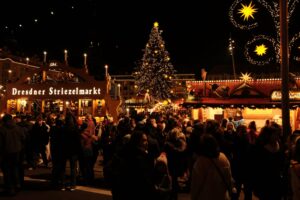
Brussels does Christmas properly. The Plaisirs d’Hiver market runs from late November through early January across the centre, with a Ferris wheel on Place Sainte-Catherine. Pack layers — the market stalls move fast on glühwein.
What we design
Brussels is a brilliant stand-alone weekend and an even better pairing. Most of our clients add a few days — Bruges and Ghent, or an onward run to Amsterdam, or a quieter detour to Luxembourg and the Ardennes. If that sounds like you, start with our how to get to Brussels by train guide, then day-trips from Brussels. When you’re ready to turn it into a trip, talk to a Travel Designer — we’ll build it round whatever’s on our current multi-centre offers and your actual dates. Belgium gets the brief it deserves on our Belgium page.