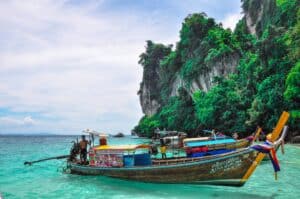
The best time to visit the Maldives is December to April, the dry north-east monsoon, when you get the most sunshine, the calmest seas and the clearest water. But the Maldives is 28 to 31 °C all year, and May to November has real advantages: lower prices, quieter resorts, manta rays and whale sharks on the western atolls, and the best surf. Here is how each month really compares, so you can pick the right one for you and your budget.
You’ll find on this page
- The quick answer by type of trip
- A month-by-month table of weather, sea and prices
- The two seasons explained, honestly
- The best time for honeymoons, families, diving and mantas and surf
- The cheapest time to go and how to save
- Resorts that suit each season, with live prices
- Answers to the questions we’re asked most
The quick answer
When to go, at a glance
- Best weather: January to March. February is usually the driest, sunniest month.
- Best value: May, June and September to early November, when prices often drop by a quarter or more.
- Best for manta rays: June to November in Baa Atoll and the western side of the atolls.
- Best for surf: March to October, with the biggest swells from June to August.
- Most expensive: Christmas and New Year, February half-term and Easter.
- Avoid if rain worries you: May and October to November, the two wettest spells.
If you want one answer, go in February or March: blue skies, glassy lagoons and fewer families than at Christmas. If you are watching the budget, late April or September are the sweet spots: still very warm, mostly sunny mornings, and noticeably cheaper.
The Maldives month by month
Temperatures barely change through the year, so the real differences are rain, wind, sea conditions and price. Sea temperature stays between 27 and 30 °C every month.
| Month | Weather | Sea and marine life | Price and crowds | Our verdict |
|---|---|---|---|---|
| January | Dry, sunny, light breeze | Calm, excellent visibility | High; peak until mid-month | Excellent |
| February | Driest, sunniest month | Glassy lagoons, best snorkelling | High; peak at half-term | Best overall |
| March | Hot, dry and sunny | Calm; mantas on eastern reefs | High; Easter peak if early | Excellent |
| April | Hottest month, showers start late | Calm; good visibility | Easter peak, then falls | Very good, great late-April value |
| May | Monsoon arrives; heavy showers | Choppier; plankton blooms | Low | Best for bargains, worst for rain |
| June | Showery, breezy, sunny spells | Mantas and whale sharks; surf | Low | Good value, mixed weather |
| July | Breezy, short showers | Mantas in Baa Atoll; big surf | Moderate; school holidays | Good for families on a budget |
| August | Breezy, showers, sunny spells | Peak manta season; big surf | Moderate; school holidays | Good for marine life |
| September | Drier spells return | Mantas; good diving | Low | Very good value |
| October | Changeable, some heavy rain | Mantas; warm sea | Low; half-term rise | Fair; good half-term deals |
| November | Wet start, drier by the end | Visibility improving | Low to moderate | Fair, improving late |
| December | Dry season begins mid-month | Calm, clear water | Peak at Christmas and New Year | Excellent, at a price |
A guide to typical conditions, not a forecast. Weather varies between the northern and southern atolls, and even in the wet season most rain falls in short, heavy bursts.
The two seasons, honestly
The dry season (December to April)
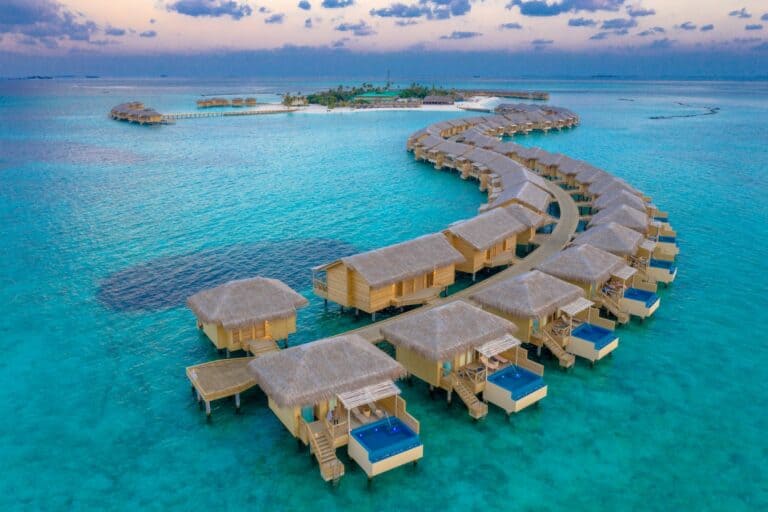
The north-east monsoon, called iruvai locally, brings settled weather: long sunny days, low humidity by tropical standards, gentle breezes and sea like glass. Water clarity is at its best, which matters if you have come for the house reef. This is the season the brochure photos are taken in, and the resorts price it accordingly. Christmas, New Year, February half-term and Easter sell out first, and overwater villas go months ahead.
The wet season (May to November)
The south-west monsoon, halhangu, brings more wind, more cloud and more rain. The word “monsoon” puts people off more than it should. A typical day is a warm sunny morning, a heavy shower that lasts an hour, then clearing skies. Some days are grey, and a stormy spell of two or three days can happen, especially in May and October. The upside: prices are lower, resorts are quieter, and the plankton the monsoon stirs up draws manta rays and whale sharks to the western side of the atolls.
One practical point: seaplanes only fly in daylight and do not fly in very poor weather, so in the wet season a resort reached by speedboat from Malé is the safer choice for a short stay.
The best time for your kind of trip
Honeymoons
February and March are the classic choice: the best chance of unbroken sunshine for dinners on the sand and sunsets from the villa deck. If your wedding is in summer, do not rule out June to September. Many resorts add honeymoon extras all year, and the savings can pay for an upgrade to an overwater villa. Our guide to the best Maldives resorts compares villa types and transfers.
Families and school holidays
Families are tied to school holidays, and the Maldives has one in every season. February half-term and Easter give dry-season weather at peak prices. The summer holidays fall in the wet season, but with long sunny spells, warm sea and family offers such as free or reduced child places. October half-term is often the best value of all. Choose a resort with a kids’ club and a pool for the odd rainy afternoon, such as Hard Rock Hotel Maldives or Villa Nautica Paradise Island. Read more in Is the Maldives good for families?
Diving, snorkelling and manta rays
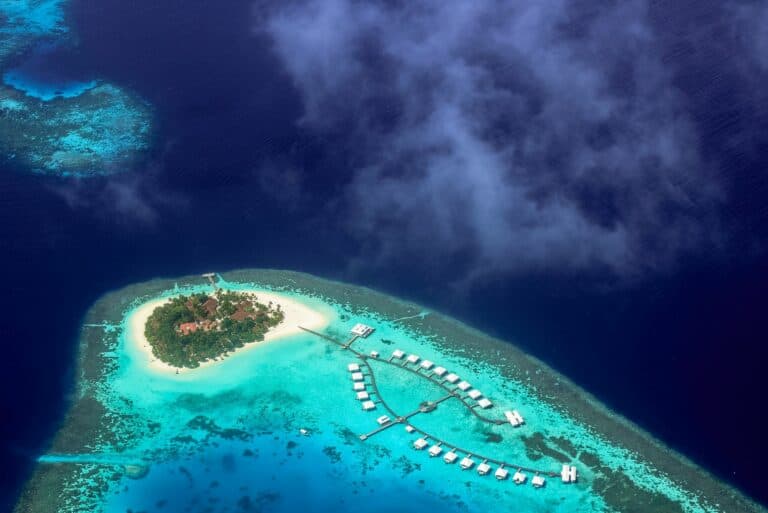
For the clearest water, come between January and April. For the big animals, come in the wet season. From around June to November, manta rays gather to feed on the western side of the atolls, with Hanifaru Bay in Baa Atoll the most famous spot. Whale sharks are seen year-round in South Ari Atoll, near Villa Park Sun Island. In the dry season the mantas move to the eastern reefs. If the house reef matters most, Ellaidhoo Maldives by Cinnamon in North Ari Atoll is one of the best for snorkelling straight off the beach.
Surfing
The surf season runs from March to October, with the most consistent swell from June to August. Cinnamon Dhonveli Maldives sits next to the famous Pasta Point break in North Malé Atoll, so a surfer and a non-surfer can both have the holiday they want.
The cheapest time to visit the Maldives
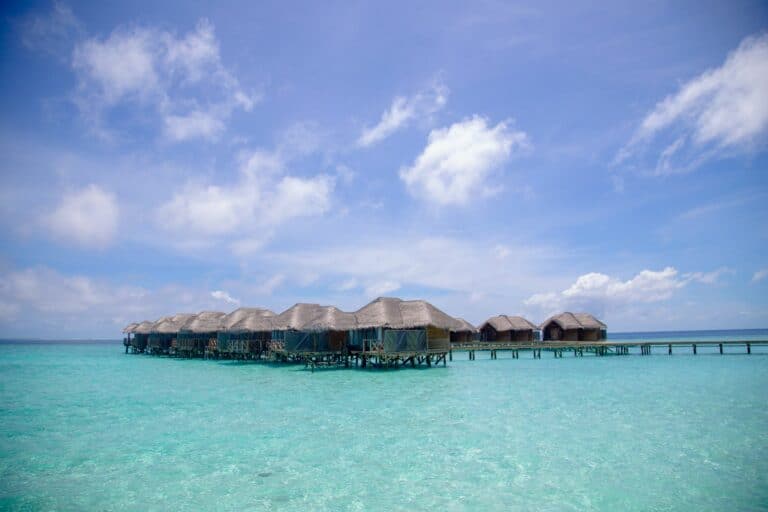
The cheapest months are usually May, June, September and the first half of November. The same villa can cost a quarter to a third less than in February, and resorts add offers such as free all-inclusive upgrades, free transfers or a free night. Late April, after Easter, is the best compromise: dry-season weather at near low-season prices.
Three other ways to save:
- Choose all-inclusive. Every resort is on its own island, so you eat and drink there every day. See our guide to all-inclusive Maldives holidays.
- Stay near Malé. A speedboat transfer costs far less than a seaplane, and you lose no time.
- Add a stopover. A twin-centre trip such as Abu Dhabi & Maldives or Dubai & Maldives can cost little more than the Maldives alone, because the flights connect anyway. Our guide to Dubai and Maldives holidays explains how many nights to spend where.
Current deals, many with free upgrades, are on our Maldives offers page, from £1,582 pp with flights.
Resorts that suit each season
These are resorts we sell, with today’s lowest price per person for a holiday of about a week with flights from London.
| Resort | Atoll | Why it suits | Best season | Price from |
|---|---|---|---|---|
| SAii Lagoon Maldives | South Malé | 15 minutes by speedboat; no seaplane worries | Any time | £2,059 |
| Hard Rock Hotel Maldives | South Malé | Kids’ club, pools, quick transfer | School holidays | £2,004 |
| Ellaidhoo Maldives by Cinnamon | North Ari | Famous house reef for snorkelling | January to April | £1,912 |
| Villa Park Sun Island | South Ari | Near the whale shark area | Year-round | £2,136 |
| Cinnamon Dhonveli Maldives | North Malé | Next to the Pasta Point surf break | March to October | £1,788 |
| Kuredu Resort & Spa | Lhaviyani | Huge island, lots to do on a cloudy day | Wet-season value | £1,651 |
| Reethi Faru Resort | Raa | Remote island, close to Baa’s manta sites | June to November | £1,884 |
Prices are per person, two sharing, with flights from London and transfers, and update automatically. Prices for other months and airports are on each resort page.
Good to know before you book
- Flight time: around 10 to 11 hours direct from London, or 12 to 15 hours with one stop in the Gulf or Istanbul.
- Time difference: the Maldives is five hours ahead of the UK in winter, four in summer.
- How long to stay: seven nights is the minimum we recommend; ten gives you time to slow down properly.
- Ramadan: resorts run as normal. You only notice it if you visit a local island, where cafés may close during the day.
- Book early for peak dates: Christmas, February half-term and Easter villas often sell out six to nine months ahead.
Before you travel, check the FCDO travel advice for the Maldives for entry requirements.
Ask us which month suits you →
Frequently asked questions
What is the best month to go to the Maldives?
February is usually the best month: it is the driest and sunniest, with calm, clear water. January, March and early April are almost as good.
What is the cheapest month to go to the Maldives?
May, June and September are usually the cheapest, along with early November. Late April is the best value for dry-season weather.
When is the rainy season in the Maldives?
The wet south-west monsoon runs from about May to November. May and October to November are usually the wettest, but most rain falls in short, heavy showers with sunshine in between.
Is it worth going to the Maldives in the rainy season?
Yes, for many people. Prices are lower, resorts are quieter, the sea is still 28 °C or more, and it is the best time for manta rays, whale sharks and surf. Choose a resort reached by speedboat for a shorter trip.
When can you see manta rays in the Maldives?
All year, but the biggest gatherings are from June to November on the western side of the atolls, especially Hanifaru Bay in Baa Atoll.
Is the Maldives hot all year?
Yes. Daytime temperatures are around 28 to 31 °C in every month, and the sea stays between 27 and 30 °C.
How far ahead should I book a Maldives holiday?
For Christmas, February half-term and Easter, six to nine months ahead. For other dates, two to four months is usually enough, and good last-minute offers do appear.
Plan your Maldives holiday
Tell us your dates and budget, and a Travel Designer will match the right month, resort and villa, with flights and transfers, ATOL protected.
Keep planning
- All Maldives holidays
- Maldives holiday offers
- The best Maldives resorts
- All-inclusive Maldives holidays
- Dubai and Maldives holidays
- Multi-centre holidays
Updated October 2026. Prices are per person, two sharing, with flights and transfers, and update automatically from our live searches; the lowest price can apply to a specific date. Flight-inclusive packages are ATOL protected. A Travel Designer will confirm everything before you book.