Catalonia might be the best road-trip region in Spain. In one day you can drive from a beach to a 2,000-metre pass, stop in a medieval village for lunch and end up at a wine cellar for dinner. The Grand Tour of Catalonia strings all of that into one 2,119 km loop, split into five sections of five to seven stages. Here’s everything you need to know before you get behind the wheel.
Our self-drive itineraries follow the official Grand Tour of Catalonia route created by the Catalan Tourist Board, and we tailor each one to your dates, pace and budget.
The quick answer
- The full loop is 2,119 km in 30 stages, clockwise from Barcelona — allow about a month.
- Most people do one section in five to seven nights.
- Best months: April to June and September to October; June to September for the Pyrenees.
- A UK licence is fine, traffic drives on the right, and stages are mostly 30–130 km.
- Budget for fuel, a few tolls, parking and Catalonia’s tourist tax, paid at each hotel.
The route at a glance
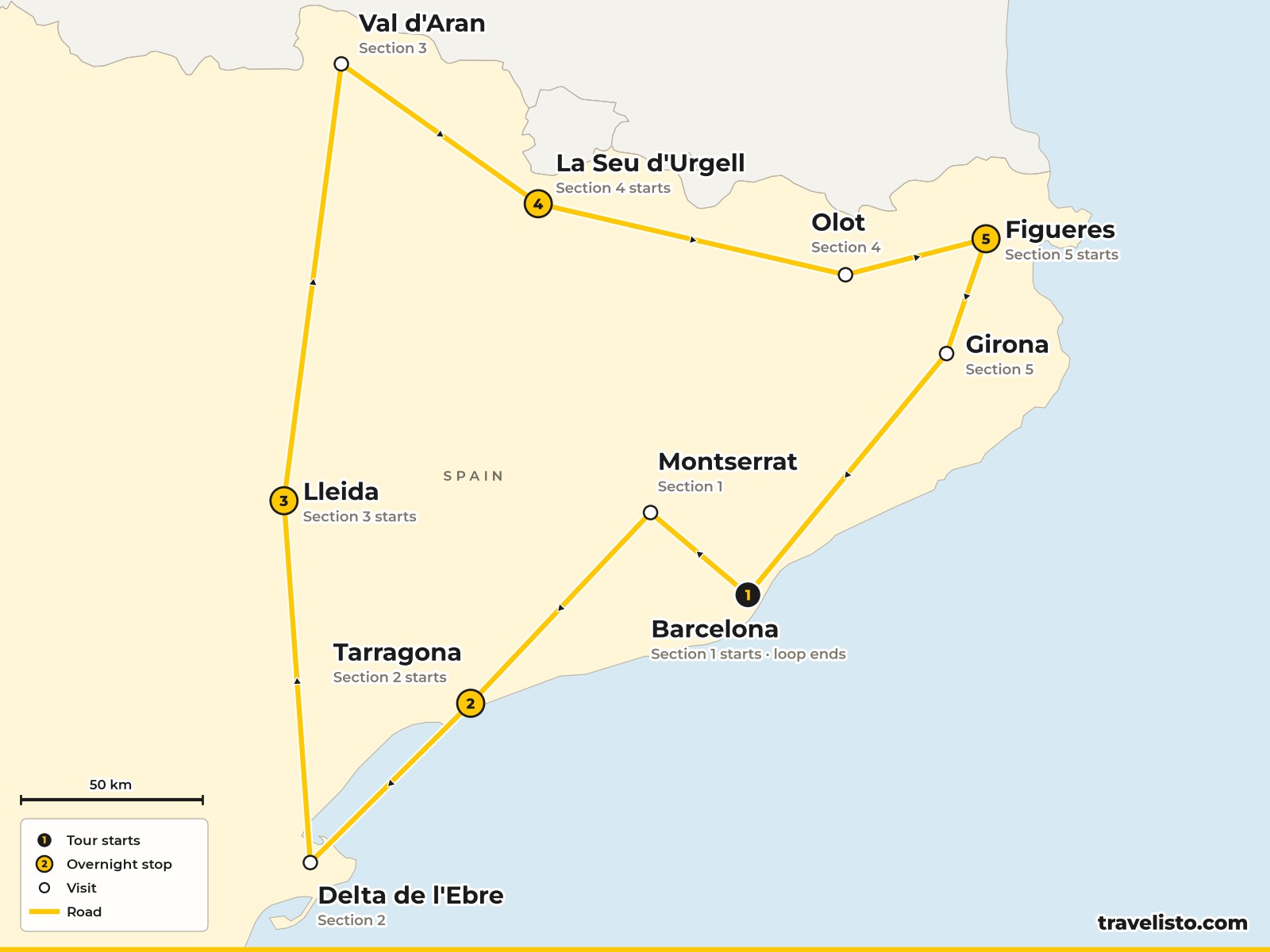
The loop runs clockwise: Barcelona to Tarragona (462 km, 6 stages), Tarragona to Lleida (418 km, 7 stages), Lleida to La Seu d’Urgell (357 km, 5 stages), La Seu d’Urgell to Figueres (357 km, 5 stages) and Figueres to Barcelona (525 km, 7 stages). Each section starts where the last one ends, so you can pick one, join two, or do the lot.
When to go
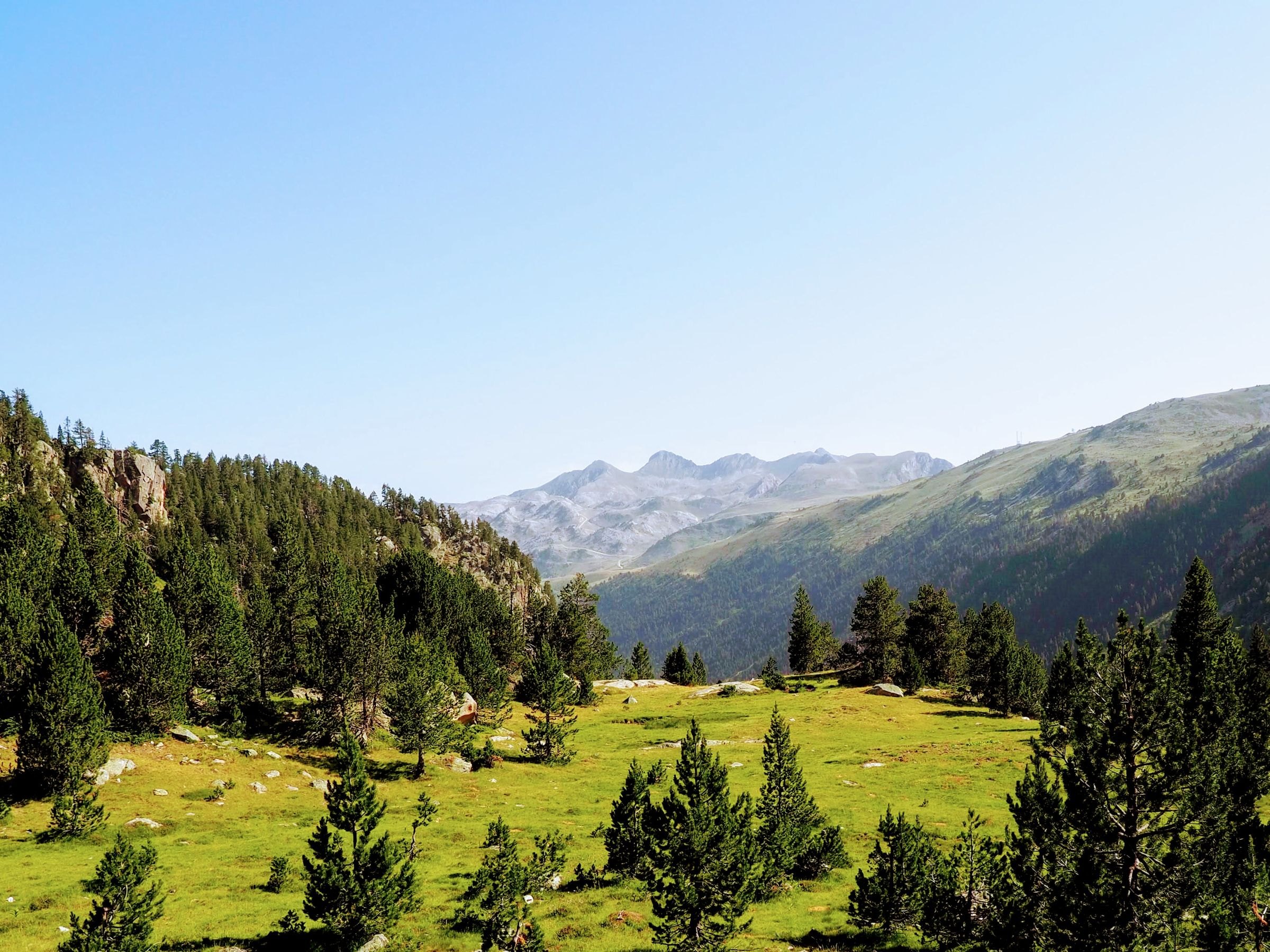
Spring and early autumn are the sweet spot for the coast, the cities and wine country: warm days, open restaurants and far fewer crowds than in high summer. The mountain sections, 3 and 4, are at their best from June to September, when the high roads are clear, the lakes are walkable and the rafting season is in full swing. In winter the Pyrenees turn into ski country and inland Catalonia grills calçots — a different trip, but a good one.
Driving in Catalonia: the practical bits
- Licence and rules: a full UK licence is accepted for car hire. Traffic drives on the right, and speed cameras are common.
- Tolls: many Catalan motorways became toll-free in recent years, but a few roads and tunnels still charge. Our routes favour scenic roads anyway.
- Cities: Barcelona has a low-emission zone and pricey parking. We plan your Barcelona days without the car and collect or drop it at the edge of the city.
- Mountain roads: the passes in Sections 3 and 4 are well surfaced but winding. Allow more time than the satnav suggests, and fill up before the high valleys.
- One-way hire: if you start and finish in different towns, there can be a drop-off fee. We include it in your quote so there are no surprises.
Ask us to plan your road trip →
Where you stay
Half the fun is the beds. Depending on the section, you might sleep beside the monastery on Montserrat, in a restored farmhouse in the Vall de Lord, in a rice-field house in the Ebro Delta, in a stone hotel in the Val d’Aran, in a masia near Olot or a glamping bubble by Lake Banyoles. In the cities we choose boutique hotels within walking distance of the old towns.
What to eat on each section
- Section 1: Cava in the Penedès, mató cheese on Montserrat, catànies chocolate almonds and Sitges malvasia.
- Section 2: suquet de romesco in Cambrils, Ebro Delta oysters, Priorat reds and Lleida’s snails a la llauna.
- Section 3: coca de recapte in Balaguer, meat cooked on a hot slate, the Aranese olha stew and Pyrenean cheeses.
- Section 4: Castellar de N’Hug’s enormous croissants, Camprodon biscuits, Santa Pau’s beans and ratafia.
- Section 5: L’Escala anchovies, Palamós prawns, Vic llonganissa, Alella wines and crema catalana you make yourself.
What it costs
Every Grand Tour holiday is priced to your dates, hotels and car, so we quote rather than publish a price. As a guide, your quote covers your hotels with breakfast, car hire (including any one-way fee), the experiences you choose and, if you want them, flights from the UK. On the road you’ll pay for fuel, tolls, parking, most meals and Catalonia’s tourist tax, which is charged per person per night at each hotel. When international flights are included, ATOL Protection is included.
How long do you need?
One section takes five to seven nights; two sections make a satisfying fortnight; the full loop takes about a month. If time is short, Section 4 is the most compact (and the second half of it has very short drives). If you have three weeks, Sections 3, 4 and 5 take you from Lleida through the Pyrenees to the Costa Brava and Barcelona. See all five on the Grand Tour of Catalonia page.
Frequently asked questions
Is it easy to drive in Catalonia?
Yes. Roads are well maintained and signposted, and most stages are 30–130 km. Mountain passes in the Pyrenees are winding, so allow extra time.
Can I do the Grand Tour without a car?
Partly by train in Barcelona, Girona, Tarragona and Lleida, but the villages and mountains need a car. A private driver-guide is available on request.
Do I need to book hotels in advance?
In summer and at weekends, yes — especially Montserrat, the Ebro Delta, the Val d’Aran and the Costa Brava. We book everything before you go.
Are there tolls?
Some roads and tunnels charge tolls, although many Catalan motorways are now free. Tolls are paid on the road.
Is there a tourist tax?
Yes. Catalonia charges a tourist tax per person per night, paid at each hotel. The rate depends on the hotel category and is higher in Barcelona.
Ready to plan your Catalan road trip?
Tell us which section appeals and how long you have, and we will build the route, hotels and car hire around you.